Dentures
Can You Whiten Dentures?


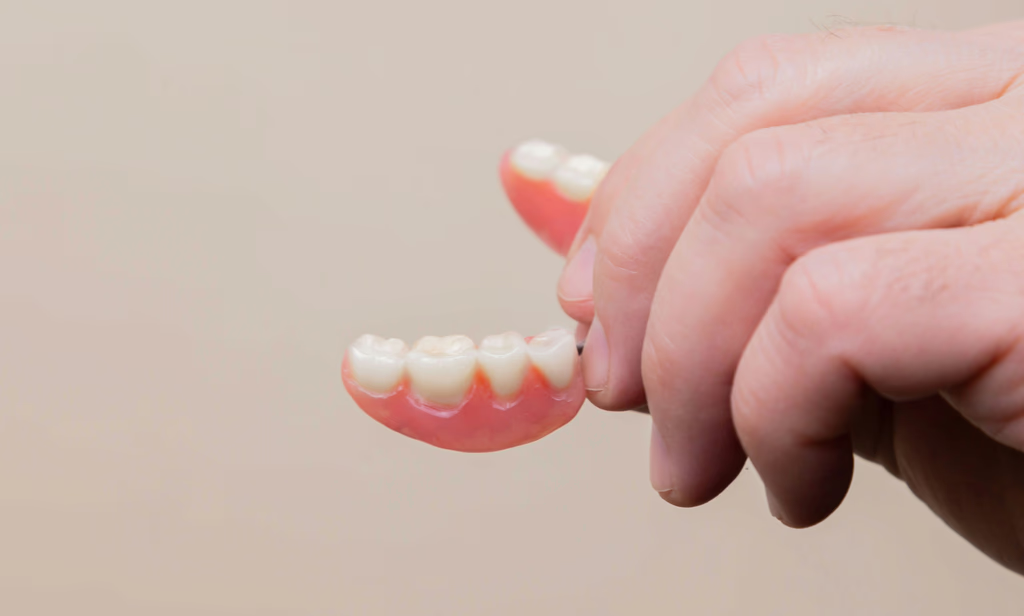
"Can I use teeth whitening products on my my false teeth?"
The short answer is no, and that's actually good news (for your wallet).
Professional teeth whitening that costs £200-1,000 simply doesn't work on false teeth. At all. Those hydrogen peroxide based treatments are only designed for natural enamel, and when applied to dentures, the chemistry just doesn't match up.
But here's why that's good news for patients looking to brighten up their dentures: denture whitening methods that actually work only cost around £10 per year, using completely different approaches that are far more effective.
Why Regular Teeth Whitening Products Don't Work on Dentures
Your false teeth are made from acrylic resin or porcelain, not tooth enamel. When professional whitening gel meets these materials, you're looking at a fundamental mismatch in how the chemistry works - and that's crucial. It's that chemistry that's entirely responsible for the whitening action.
Professional teeth whitening (for actual teeth) uses hydrogen peroxide at 35-40% concentrations that are designed for natural tooth structure. Apply these same concentrations to denture materials, however, and the only likely result is damage to the dentures themselves.
The science is straightforward: different materials require different treatment approaches. You can think of it like how cleaning methods that work brilliantly on one surface can damage another entirely. It's like that.
What Actually Works (And Costs Almost Nothing)
Fortunately, the methods for whitening dentures that show the best results cost practically nothing compared to professional teeth whitening.
Denture Cleaning Tablets
For the most straightforward option, denture cleaning tablets cost about £8-25 for a pack, and they last for months. These tablets are specifically formulated for denture materials, so they target stains without affecting the underlying structure. A 15-minute soak typically produces noticeable whitening results.
Hydrogen Peroxide Solution
Regular hydrogen peroxide from the pharmacy (about £4-5) can work for surface cleaning of dentures, but the application method is completely different compared to teeth whitening. Instead of the aggressive concentrations used in professional whitening, denture cleaning uses a much gentler 3% hydrogen peroxide solution with gentle brushing.
Again, the chemistry is completely different here compared to whitening natural teeth. It's a surface cleaning approach rather than "whitening," removing surface stains on the dentures without damaging the denture material.
Using about 10ml per cleaning session, a 200ml bottle provides roughly 20 treatments, working out to about £0.25-£0.30 per cleaning session, or £7.50-£9.00 per month for daily use.
Baking Soda Soaking
Baking soda and water is an option sometimes seen recommended, but it requires careful consideration based on recent scientific research. A study published in PMC (PubMed Central) found that "baking soda has stronger abrasive characteristics compared to table salt" and that denture plates "were most affected by the medium-bristle toothbrush with baking soda – the total reflection reduction was 4.82±0.1%". The researchers concluded that "the usage of baking soda is not recommended for removable denture care" when used as a brushing paste, because it can be abrasive to dentures and cause minor scratches.
However, the application method makes all the difference. Multiple dental sources recommend baking soda soaking solutions, noting that it can be used daily without damaging your dentures when used for overnight soaking rather than direct brushing.
The safer approach appears to be dissolving two tablespoons of baking soda in a glass of warm water and letting dentures soak overnight rather than creating a brushing paste.
At current Tesco pricing (at the time of writing), a 200g box of bicarbonate of soda costs £0.65, working out to £0.32 per 100g. Since each overnight soak uses about 40g of baking soda, this method of whitening dentures costs roughly £0.13 per soak, or about £3.90 per month for daily use, while avoiding the abrasion risks associated with direct brushing.
White Vinegar Soaking
White vinegar soaking is another option, and it shows particular effectiveness on stubborn stains and costs even less. However, only white distilled vinegar shows effectiveness, and other varieties like apple cider vinegar can actually stain the dentures.
Using current Tesco pricing, their 568ml Distilled Vinegar costs £0.35 (£0.06 per 100ml). Equal parts vinegar and water for 30-minute soaks uses about 50ml of vinegar per treatment, costing just £0.03 per soak. For daily use, this works out to only £0.90 per month.
It goes without saying: with all of these cleaning methods, the dentures must be rinsed with water until they're completely clean before using them again.
The Professional Option That Actually Makes Sense
Some dental practices offer professional denture cleaning, which is usually seen to cost anywhere between £20-60. This involves specialized polishing equipment that can restore heavily stained dentures to nearly original appearance.
Once again, this isn't anything like professional teeth whitening for natural teeth, this approach of denture cleaning works on false teeth because the dental practitioners who offer it use tools and techniques specifically designed for denture materials.
Twice a year professional denture cleaning would come to a cost of £40-120 per year. More expensive than gentle methods that can be done at home, but for keeping dentures looking almost as good as new, it's certainly an option.
The Prevention Advantage: Data on Denture Staining vs Natural Teeth
Denture wearers have a unique advantage over people with natural teeth, in that they can be removed immediately for cleaning whenever necessary. Research shows this creates measurable differences in stain accumulation patterns.
Scientific studies demonstrate that it only takes one cup of coffee a day to cause stained teeth and that coffee contains ingredients called tannins, which are a type of polyphenol that breaks down in water and stains teeth. With dentures, this contact can be interrupted immediately through removal and rinsing. Natural teeth remain exposed to staining compounds for the entire duration between brushing sessions, typically 12-24 hours.
The foods that stain dentures follow predictable patterns based on tannin content and pH levels. Research data shows that roasted coffee beans contain 18 ± 1.7 mg g-1 weight tannic acid equivalents while tea contained 37 ± 2.6 mg g-1 weight tannic acid equivalents, indicating tea has approximately twice the tannin concentration of coffee. These compounds bind to denture materials through the same mechanisms as natural enamel, but denture removal allows for intervention within minutes rather than hours.
Toothpaste manufacturers also suggest that adding milk to your tea or drinking with a straw can help, as well as rinsing or drinking water after. These can help wash away tannins and chromogens before they have a chance to bind to your teeth (and dentures).
For a more professional approach, UK market research shows daily denture cleaning supplies (specialized brushes and non-abrasive cleaners) cost £15-30 for the initial purchase, with replacement supplies for them being required every 3-6 months averaging £8-15. Cost-per-use calculations work out to approximately £0.08-0.15 per day, significantly lower than the £0.55-2.75 daily cost when professional teeth whitening treatments have their 6-12 month effectiveness period put in terms of daily costs.
Unlike with dentures, studies show that the addition of milk to black tea and (probably) coffee changes the morphology of the surface layer of teeth, making it less resistant to brushing.
Our Summary
Professional teeth whitening costs £200-1,000 and doesn't work on false teeth.
Effective denture whitening costs £5-50 per year using readily available methods that are approved for denture materials.
New dentures cost anywhere between £500-2,500, so maintaining the patient's existing ones in good condition extends their useful life significantly.
The mathematics are straightforward: daily maintenance costing an average of £10-20 annually certainly beats premature denture replacement for aesthetic reasons.
Most patients don't realize they're operating under completely different tooth care rules for their false teeth. In the case of whitening, those different rules work heavily in their favor, both for effectiveness and cost.
Not healing the way it should?
Most recoveries are completely normal. If yours feels wrong, £20 gets it looked at properly today, and then you'll know. Free follow-ups whenever we did the treatment.
Or check what needs a dentist today, and what can wait →