Chipped Tooth
Chipped Tooth Repair Cost


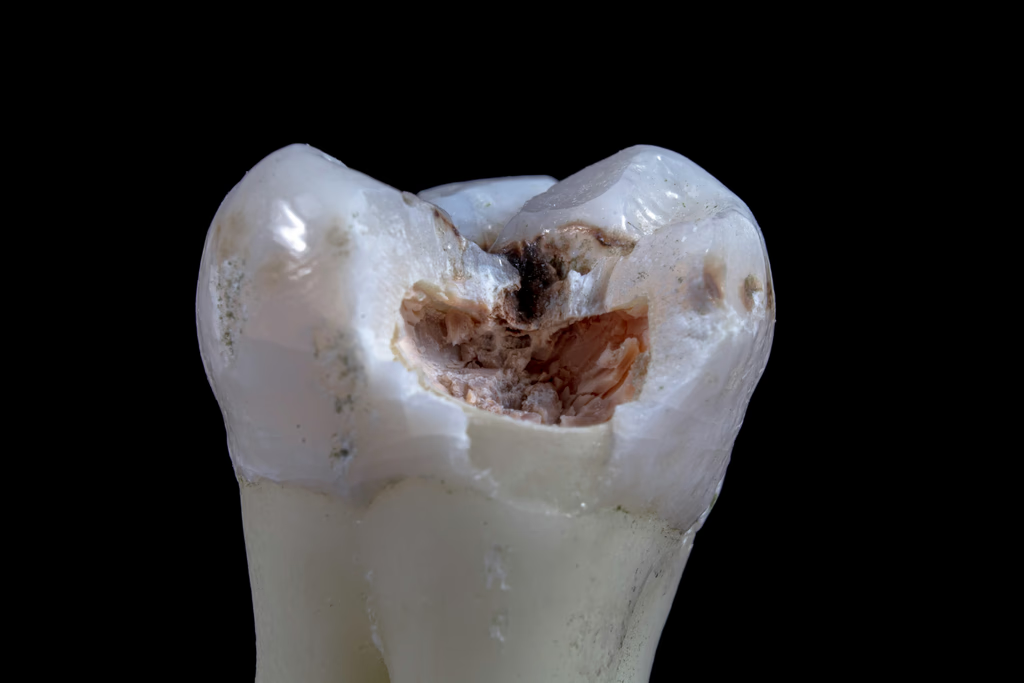
Here's something most people don't realize when they chip a tooth: the repair you need has almost nothing to do with how much it hurts and everything to do with where the chip is and how big it looks. A massive chip on a back molar might cost £150 to fix. A tiny chip on a front tooth can run £700 if you want it to look right.
The options break down into four categories, and they're not interchangeable. Bonding works for small chips. Veneers work for front teeth where you care about appearance. Crowns work when the tooth's structural integrity is compromised. Smoothing works when the chip is so minor you're mostly just annoyed by the rough edge.
What's curious is that the cheapest option (£50 smoothing) and the most expensive option (£1,500 crown) can both be treating the exact same size chip. The difference isn't severity. It's whether the tooth shows when you smile and how much you care about that.
What Does Chipped Tooth Repair Actually Cost?
So where does all of this land in real money? Chipped tooth repair runs from about £50 for a quick smooth-and-polish up to around £1,500 for a full crown, and most front-tooth repairs sit happily somewhere in between: composite bonding from £199 a tooth, or a porcelain veneer at £695 when you want it to last for years and catch the light like real enamel. Here's the whole picture at a glance, private prices across the UK next to what we charge here at UrgentCare Dental:
| Repair option | Typical UK price | At UrgentCare Dental |
|---|---|---|
| Smoothing and contouring | £50 to £150 | Quoted at your assessment |
| Composite bonding | £90 to £400 | from £199 per tooth |
| Composite veneer | £150 to £400 | Quoted at your assessment |
| Porcelain veneer | £500 to £1,200 | £695 per tooth |
| Crown | £450 to £1,500 | Quoted at your assessment |
| Root canal (only if the chip reaches the nerve) | £400 to £900 | from £399 per canal |
Every one of those paths starts with the same £20 assessment, so you walk out knowing your exact price before you decide anything at all. Now let's walk through what each of these repairs actually involves, so you can see which one fits your chip.
Composite Bonding: The Quick Fix
Bonding involves applying tooth-coloured resin directly to the chipped area. The dentist roughens your tooth with gel, applies adhesive, sculpts resin to match your tooth shape, then blasts it with UV light to harden. Thirty minutes to an hour and you're done.
Cost runs £100 to £400 per tooth privately. UrgentCare Dental charges from £199 per tooth. The spread depends on practice location and whether you're fixing multiple teeth in one session, which often gets you a volume discount.
Here's what makes bonding appealing: it's fast, it's reversible, and for small chips on front teeth, it's nearly invisible when done well. The resin gets colour-matched to your existing teeth. A skilled dentist can make the repair vanish completely.
Here's what makes it less appealing: the material isn't as strong as your actual tooth. Coffee stains it. Wine stains it. Smoking really stains it. After five to seven years, that invisible repair starts looking yellow and obvious. The bonded area also wears down faster than natural enamel, especially if you're chewing on that tooth regularly.
This is why bonding works better on front teeth than back ones. Your incisors don't do heavy lifting. They tear food, not grind it. Molars crush things with tremendous force, and bonding material can't handle that punishment long-term. It'll chip again or wear through within a couple years on a back tooth.
Dental Veneers: The Aesthetic Solution
Veneers are thin shells that cover the front of your tooth. Think of them as fancy false fingernails for teeth. They hide the chip and everything else wrong with that tooth's visible surface in one go.
Composite veneers run £150 to £400. Porcelain veneers cost £500 to £1,000, with premium options at £695 per tooth. The price gap reflects what you're getting: composite is basically thick bonding shaped like a shell. Porcelain is lab-fabricated to look genuinely like tooth enamel, with the same translucency and light reflection.
Veneers shine when you have multiple problems with a front tooth. Chipped and stained? One veneer fixes both. Chipped and slightly crooked? Same deal. You're paying for the veneer anyway, so you might as well get all the cosmetic benefit possible.
The catch with porcelain veneers is permanence. To fit the veneer, the dentist grinds off about half a millimetre of your natural enamel. Once that's gone, you'll need something covering that tooth for life. You can replace the veneer when it wears out, but you can't go back to your natural tooth. It's a one-way door.
Composite veneers are more reversible since they require less tooth preparation, but they stain and chip faster than porcelain. You're basically getting 5 to 7 years before replacement versus 10 to 15 years with porcelain. Over a lifetime, the math shifts in porcelain's favor despite the higher upfront cost.
Dental Crowns: The Structural Solution
Crowns completely cap the tooth, covering it from all sides. They're made from various materials: porcelain, ceramic, metal, or combinations. The crown restores both appearance and strength, protecting a tooth that's been significantly damaged.
Costs range from £650 at UrgentCare Dental to £1,500 at other UK practices depending on material choice. Metal crowns cost less but are visible. Porcelain and ceramic crowns cost more but look natural. Zirconia crowns sit at the premium end, offering both strength and aesthetics.
Crowns become necessary when chips are large enough to weaken the tooth's structure. If more than a quarter of the tooth is missing, or if the chip extends below the gum line, bonding or veneers won't provide adequate protection. The tooth needs full coverage to prevent further fracture.
The process requires two visits. First appointment involves numbing the area, reshaping the tooth to accommodate the crown, taking impressions, and placing a temporary crown. The lab fabricates your permanent crown over one to two weeks. Second appointment involves removing the temporary crown and cementing the permanent one in place.
Some practices offer same-day crowns using CAD/CAM technology. A digital scan replaces impressions, and an in-office milling machine creates the crown while you wait. This eliminates the temporary crown phase and completes treatment in one appointment, though not all practices have this equipment.
Longevity for crowns runs 10 to 25 years depending on material and care. Porcelain crowns can last 15 years, zirconia crowns up to 25 years. Metal crowns are most durable but least aesthetic. With proper maintenance and avoiding habits like teeth grinding, crowns can last decades.
Crowns require more tooth preparation than bonding or veneers. The dentist removes more natural tooth structure to create room for the crown's thickness. This makes crowns less reversible than other options, though they provide the most protection for severely damaged teeth.
If the chip exposes the tooth's inner pulp (the nerve and blood vessel chamber), you'll need a root canal before crown placement. This adds £400 to £900 to the total cost but becomes necessary to prevent infection and pain.
Cosmetic Contouring: The Minimal Intervention
For the tiniest chips, cosmetic contouring (also called enameloplasty or tooth reshaping) involves simply smoothing and polishing the rough edges. The dentist uses fine dental instruments to round off sharp points and blend the chip into the tooth's natural contour.
Cost typically runs £50 to £150 per tooth. This is the most affordable option because it's quick and requires minimal equipment or materials. The process takes 15 to 30 minutes and completes in one visit.
Contouring works only when the chip is superficial and doesn't affect tooth structure or function. We're talking about tiny edge chips, slightly jagged points, or minor roughness. If you can feel the chip with your tongue but it's not visible or causing sensitivity, contouring might suffice.
The limitation is that you're removing tooth structure rather than adding material. The dentist can't build up the tooth or change its shape significantly. They can only smooth what's there. For anything beyond very minor cosmetic improvement, you'll need bonding, veneers, or crowns.
Some dentists combine contouring with bonding for optimal results. They smooth the surrounding area to create a better foundation, then apply minimal bonding material just where needed. This hybrid approach often looks more natural than bonding alone.
What Actually Happens If You Do Nothing
Ignoring a chipped tooth is like ignoring a crack in your windshield. It won't stay the same size. It'll spread.
The chipped edge gets sharper through wear, cutting your tongue or cheek. Small chips expand into larger cracks as the structural weakness propagates through the tooth. Physics doesn't care that you're pretending the chip isn't there.
Bacteria love damaged enamel. They colonize the rough surface and work their way deeper into the tooth. What starts as a cosmetic chip becomes decay, which becomes a cavity, which becomes root canal territory. Every week you wait, bacteria dig deeper.
Sensitivity creeps up gradually. Hot coffee starts bothering you. Cold water makes you wince. Sweet foods trigger that zingy nerve pain. The chip exposed inner tooth layers that weren't meant to touch air, and now they're letting you know about it.
For front teeth, there's the vanity factor. A visible chip affects how you smile in photos, how confidently you talk to people, whether you cover your mouth when you laugh. That's not a health risk, but pretending it doesn't bother you when it clearly does serves no one.
The tooth can fracture further without warning. You bite down on something normal and suddenly half your tooth is gone instead of just a small chip. Now you're looking at extraction and replacement rather than simple repair. The financial difference is brutal: £200 bonding today versus £2,500 implant tomorrow.
How Chip Severity Determines Treatment
Tiny chips affecting only enamel (the outer layer) can be smoothed with contouring or repaired with minimal bonding. These chips don't expose the dentin (the layer beneath enamel) and cause no sensitivity. They're purely cosmetic concerns.
Small chips extending into dentin but not near the pulp work well with bonding or veneers. You'll notice some sensitivity to temperature changes, but the damage hasn't reached the nerve. Treatment prevents further damage and resolves sensitivity.
Medium chips that remove significant tooth structure or affect the biting surface need crowns for adequate protection. The tooth's structural integrity is compromised enough that surface treatments won't withstand normal chewing forces.
Large chips exposing the pulp require root canal treatment before any cosmetic repair. The exposed nerve causes severe pain and infection risk. The root canal removes the damaged nerve, and a crown protects the remaining tooth structure.
Chips extending below the gum line often require extraction. If the fracture goes too deep into the root, the tooth can't be saved with crowns or any other treatment. Extraction followed by an implant or bridge becomes the only option.
Location Makes a Difference
Front teeth (incisors and canines) get bonding or veneers most often because appearance matters. These teeth show when you smile and talk, so matching natural tooth colour and translucency is crucial. They also experience less biting force than back teeth, making bonding more viable long-term.
Premolars (the teeth just behind your canines) work with any treatment. They're partially visible but do significant chewing work. Treatment choice depends more on chip size than location for these teeth.
Molars (your back teeth) typically get crowns when significantly chipped. They handle the heaviest chewing forces and aren't visible when smiling. Durability matters more than aesthetics, making crowns or even large fillings appropriate depending on the damage.
If a chip doesn't affect your smile and isn't causing sensitivity, some people opt for minimal treatment on back teeth. A small chip on a molar might warrant just smoothing if it's not progressing. Front teeth usually get repaired regardless of size due to visibility.
Comparing Long-Term Costs
Bonding at £200 per tooth lasting 7 years costs about £29 annually. Factor in potential replacements every 5 to 10 years over your lifetime.
Porcelain veneers at £700 per tooth lasting 12 years cost about £58 annually. Higher upfront cost but longer lifespan can make them more economical than repeated bonding for front teeth.
Crowns at £650 lasting 15 years cost about £43 annually. Even cheaper crowns lasting 10 years still work out reasonably on a per-year basis compared to repeated bonding.
These calculations assume you maintain the restoration properly. Poor oral hygiene, teeth grinding, or chewing hard objects will shorten any restoration's lifespan significantly.
The cheapest option upfront isn't always the most economical long-term. If you're fixing a visible front tooth you want to last, porcelain veneers often make more financial sense than cheaper composite bonding that needs replacing more frequently.
Making Sense of Your Options
Here's the reality most dentists won't tell you upfront: location determines treatment more than severity. A huge chip on a back molar gets a £150 filling or £650 crown because nobody sees it. A tiny chip on a front incisor gets a £700 porcelain veneer because you can't walk around with a visibly damaged front tooth.
This creates an uncomfortable truth: the same chip costs five times more to fix if it's visible. Insurance companies understand this, which is why they often refuse to cover cosmetic repairs even when the chip is objectively there and getting worse.
For tiny chips causing no functional problems, contouring or minimal bonding works. For small to medium chips on front teeth, you're choosing between bonding (cheaper, less durable) and veneers (expensive, longer-lasting). For large chips threatening the tooth's structure, crowns become necessary regardless of location.
If you're genuinely unsure about severity, emergency assessment at £20 gets you professional evaluation. The dentist shows you exactly how deep the chip goes, what's at risk, and what your options cost. That's worth paying for before committing to anything expensive.
Most chipped tooth repairs aren't medical emergencies unless you're in severe pain or bleeding heavily. You can book a regular appointment within days rather than paying emergency fees. But treating chips sooner prevents them from becoming something that does require emergency care.
The main thing to understand is that chipped teeth don't heal. Enamel is dead tissue. It can't regenerate like skin or bone. The chip you ignore today will be bigger next month and potentially catastrophic next year. Early treatment isn't just cheaper. It's the difference between keeping your tooth and losing it.
Your Chipped Tooth Cost Questions, Answered
Is it worth repairing a chipped tooth?
Almost always, yes. A chip never heals on its own, because enamel isn't living tissue that grows back, so that rough little edge keeps wearing and the tiny crack keeps spreading until a small fix becomes a big one. Repairing it early, while composite bonding from £199 a tooth still does the job, is far kinder to your tooth and your wallet than waiting for it to fracture.
What is the most affordable way to fix a chipped tooth?
For a tiny edge chip, simple smoothing and polishing is the gentlest and cheapest route, usually £50 to £150, because it needs no material at all, just a careful reshape. For anything you can actually see, composite bonding from £199 a tooth gives you the best value going: it's done in a single visit, colour-matched to vanish into your smile, and it protects the tooth at the same time.
Is it expensive to fix a chipped tooth?
It really doesn't have to be. Most front-tooth chips are sorted with bonding from £199 a tooth, and even a full porcelain veneer at £695 is a one-off that comfortably lasts ten to fifteen years. The bigger costs only creep in when a chip is left so long that the tooth needs a crown or a root canal, which is exactly why catching it early keeps it cheap.
How much does it cost to fix a chipped front tooth compared to a back tooth?
Here's the curious part: the very same size chip can cost around five times more on a front tooth than a back one, and it all comes down to whether it shows. A back molar chip might just need smoothing or a filling because nobody ever sees it, while a front tooth usually gets bonding or a porcelain veneer at £695 so it looks completely natural when you smile, talk and laugh.
Is the £20 assessment the full cost of the repair?
No, the £20 assessment is the first step, and it's the most important one. It's where we look closely at how deep the chip really goes, show you exactly what's happening, and give you a clear price for the repair before you commit to a single thing. You'll never be surprised by a number: you'll know it up front and decide from there.
Ready for Your Dream Smile?
Composite bonding from £199, veneers from £695. 0% finance available on treatments over £500.
Or see all our cosmetic treatments, with prices →