Dental Implants
Dental Implant Failure Rates UK


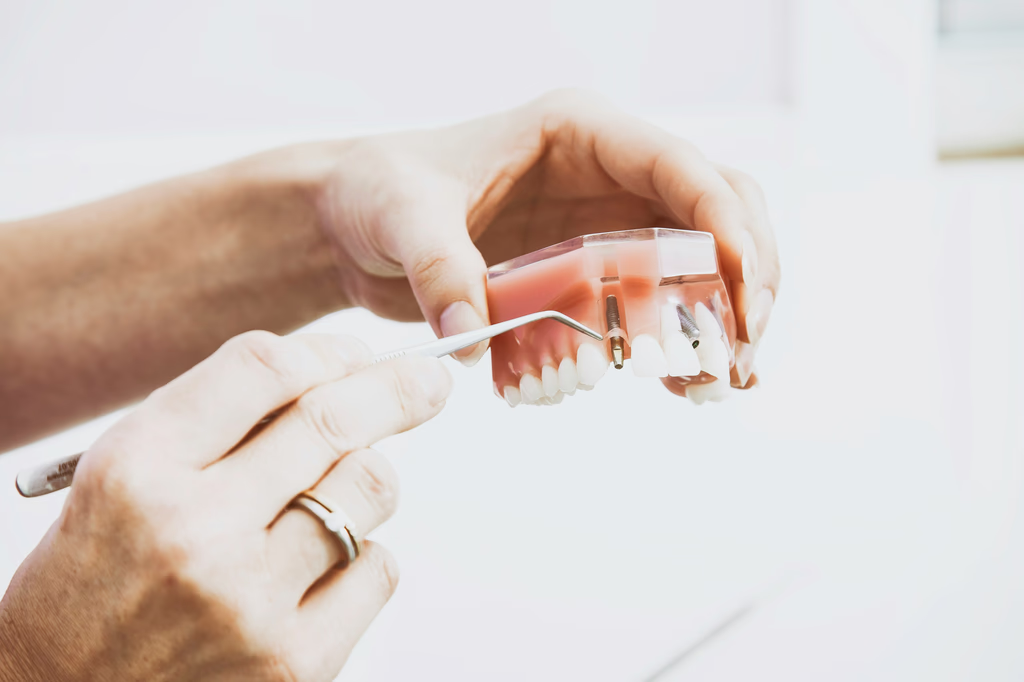
The reality of dental implant failure rates in the UK might surprise you. While the marketing materials promise near-perfect success, the actual numbers tell a more complex story that varies dramatically between patients, locations, and clinical conditions.
Current UK Failure Rate Statistics
Recent UK studies show overall dental implant failure rates ranging from 2.1% to 3.11%, though these figures represent carefully controlled clinical environments. A comprehensive UK survey of 5,328 implants across 39 dental centres revealed failure rates of 4.3% in the mandible and 16% in the maxilla - significantly higher than what most practices advertise.
The disparity becomes even more pronounced when examining longer-term outcomes. While initial survival rates reach 96.3%, the total survival rate including reimplantation attempts climbs to 99.2%, suggesting many patients require multiple procedures to achieve success.
International studies document failure rates ranging from 1% to 19%, with the wide variance largely dependent on patient selection criteria and follow-up duration. A large-scale analysis of 9,080 implants found a survival rate of 96.13%, with 351 implants failing among 266 patients.
Early vs Late Implant Failures
The timing of implant failure reveals distinct patterns that affect treatment planning and patient expectations.
Early Failure Patterns
Early dental implant failure accounts for 83.48% of all failures, occurring within the first few months. These immediate complications typically stem from surgical factors and initial healing problems.
Early failures result from the inability of the implant to establish close contact with the jaw bone due to surgical trauma, poor bone quality, or excessive heating during drilling. Smoking, male gender, and younger age correlate strongly with early failure rates.
The mandible shows particular vulnerability to early complications. Significant earlier failure occurs in the mandible, especially in the posterior area, with an odds ratio of 3.729.
Late Failure Characteristics
Late failures represent 16.52% of total implant losses, typically manifesting after the implant has been in function for months or years. Late implant failures usually stem from infectious origins, with peri-implantitis present in 34% of patients.
Age plays a crucial role in late failure risk. Patients aged 60 to 79 experience higher failure rates compared to younger patients under 40 years old. Maxillary implants show increased likelihood of late failure with an odds ratio of 3.729.
Peri-Implantitis: The Hidden Epidemic
Peri-implantitis represents the most significant threat to long-term implant survival, yet many patients remain unaware of its prevalence until symptoms become severe.
Infection Prevalence and Impact
Statistics show that 30% of dental implant failures result from gum disease around the implant. The condition develops insidiously, often without pain in the early stages.
Peri-implantitis results in bone loss around the implant and total rejection in 90% of cases, with treatments showing a success rate of only 10%. This stark reality contrasts sharply with the optimistic projections many patients receive during initial consultations.
In patients with treated chronic periodontitis, dental implant loss occurs at 0.4 implants per patient per year - ten times higher than natural tooth loss in the same population. This finding challenges the common narrative that implants represent a superior alternative to maintaining natural teeth.
Bacterial Mechanisms
Bacterial infection represents the most frequent and avoidable cause of dental implant failure. The implant surface design itself contributes to vulnerability.
The rough surface originally designed for tissue attachment becomes a breeding ground for bacteria, with gram-negative anaerobes like Prevotella intermedia, Porphyromonas gingivalis, and Aggregatibacter actinomycetemcomitans most commonly associated with failure.
Tartar buildup at the implant site harbours toxin-emitting bacteria that cause tissue irritation, ultimately resulting in tissue and bone loss. Once established, these bacterial colonies prove remarkably resistant to treatment.
Risk Factor Analysis
Understanding individual risk factors proves essential for realistic outcome expectations and informed consent.
Surgical and Anatomical Factors
Major risk factors include type III-IV bone density (75% of failures), pre-implant sinus lift surgery (42% of failures), and surgical site infection (8.3% of failures). Location matters significantly - posterior regions of the mouth show higher failure rates than anterior regions due to increased plaque accumulation.
Implant dimensions influence outcomes measurably. Implants measuring 10mm in length account for 52.7% of failures despite representing only 31% of total placements. This dimensional vulnerability extends to reimplantation attempts as well.
Patient-Specific Variables
Age at reimplantation and smoking significantly increase the risk of repeated failure. Gender differences persist across multiple studies, with failure more common in men than women.
Medical conditions create additional complexity. Diabetes impacts osseointegration more severely in the maxilla with its predominance of cancellous bone compared to the anterior jaw's cortical bone. Cardiovascular disorders affect tissue blood flow directly, hindering healing and oxygen delivery necessary for successful integration.
Technical Considerations
Surgical technique profoundly impacts outcomes. Guided implant placement shows a risk ratio of 0.29 compared to free-hand techniques, with failure rates almost three times higher in free-hand placement.
The cement binding the crown to the implant post can cause infection if it leaks into the gums, highlighting how seemingly minor technical details cascade into major complications.
Reimplantation Success Rates
When initial implants fail, the prospects for successful replacement vary considerably based on failure timing and patient factors.
Of 91 failed implants, 69 received reimplantation with a one-year survival rate of 89.4%. However, all eight re-failed implants showed early failure patterns, suggesting that patients prone to early complications face persistent challenges.
Reimplantation failure correlates more strongly with patient factors than implant factors. Interestingly, patients taking anti-thrombotic agents showed statistically significant negative association with reimplantation failure, possibly due to improved blood flow during healing.
Long-Term Survival Patterns
Extended follow-up reveals concerning trends that shorter studies often miss. Implant survival reaches 100% up to five years, then fails at 10.08% in the six to ten-year range. This delayed failure pattern suggests that many implants considered "successful" at typical study endpoints may still fail later.
Long-term success rates range from 90-98%, but these figures often exclude patients lost to follow-up or those who sought treatment elsewhere after complications.
Geographic and Practice Variations
UK failure rates show significant regional and practice-level variation. Some UK centres report maxillary failure rates higher than previously suggested domestically or internationally, raising questions about training standards and quality control.
The lack of universal definitions complicates accurate assessment. Wide-ranging opinions exist on defining failing implants and failure causes, with no agreed treatment protocols for failing implants.
Financial Implications
Failed implants carry substantial financial burdens rarely discussed during initial consultations. With peri-implantitis treatments showing only 10% success rates, patients often face repeated procedures and mounting costs.
Replacement procedures typically cost the same as initial placement, doubling the investment for those experiencing failure. Additional bone grafting, extended healing periods, and lost work time compound the financial impact.
Conclusion
UK dental implant failure rates paint a more nuanced picture than marketing materials suggest. While many implants succeed long-term, failure rates between 3-16% depending on location and patient factors represent thousands of failed procedures annually.
The dominance of early failures at 83% of cases emphasises the critical importance of initial surgical technique and patient selection. Late failures, though less common, prove particularly challenging given the poor success rates of peri-implantitis treatment.
Patients considering implants deserve transparent discussion of these realities, including location-specific failure rates, individual risk factors, and the financial implications of potential failure and retreatment. The data suggests that for many patients, particularly those with periodontal disease history, maintaining natural teeth might offer better long-term outcomes than the promise of "permanent" implant solutions.
For those proceeding with implants, understanding these failure patterns enables better monitoring, earlier intervention, and more realistic expectations about long-term maintenance requirements and potential complications.
Want the real number for your case?
An article can only give you a range. The £20 appointment gets you a fixed quote from a dentist who has actually looked. Extractions from £149, implants £1,999, and 0% finance on treatments over £500.
Or see every price on one page →