Missing Teeth
Missing Tooth Replacement Options


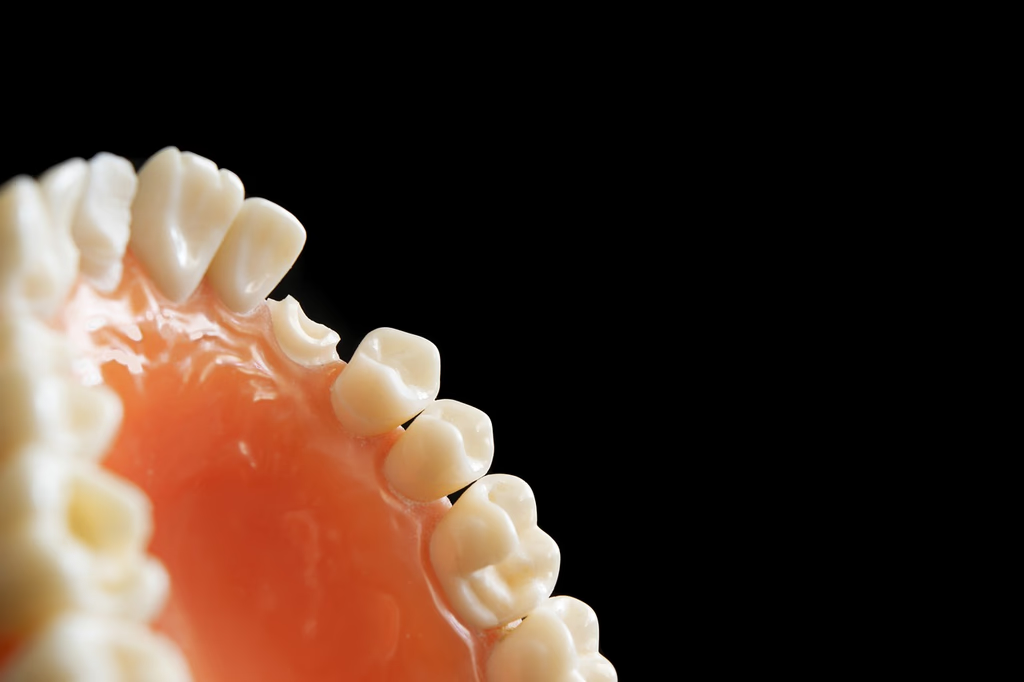
When you lose a tooth, you essentially have four options: dental implants, bridges, dentures, or leaving the gap alone. Each option represents a different set of trade-offs between cost, permanence, convenience, and what happens to your mouth over time.
Here's what's curious about tooth replacement: the "best" option depends entirely on which problem matters most to you right now. The cheapest solution upfront (dentures) costs you more in replacements and adjustments over twenty years. The most expensive option (implants) works out cheaper per year of use but requires surgery and months of healing. The middle ground (bridges) depends on your neighboring teeth being healthy enough to support extra weight.
None of this is straightforward, and anyone telling you there's one "right answer" is probably selling something. What you're really choosing between is which set of compromises you can live with.
So here's the short version, the one worth holding in your head while you weigh it all up. Your four routes are a dental implant, a bridge, a denture, or leaving the gap for now, and they trade cost against how long they last and what quietly happens to the bone underneath. An implant costs the most upfront (£2,000 to £4,500 a tooth) but lasts the longest and is the only one that keeps your jawbone stimulated so your face shape stays put. A bridge (£400 to £1,500 a tooth) is the faster fixed option when you'd rather skip surgery. A denture (£200 to £2,000 an arch) is the kindest on your budget. And doing nothing costs nothing today, but it lets the neighbouring teeth drift into the gap. At UrgentCare Dental a single implant is £1,999, which sits right at the affordable end of that range. Everything past this point is really about matching one of those four to the way you actually live.
Here's how the four line up at a glance:
| Option | Typical UK cost | How long it lasts | Protects the jawbone | Surgery needed? |
|---|---|---|---|---|
| Dental implant | £2,000-£4,500 a tooth | 15-25 years or more | Yes | Yes |
| Dental bridge | £400-£1,500 a tooth | 10-15 years | No | No (some tooth prep) |
| Denture (partial or full) | £200-£2,000 an arch | 5-8 years | No | No |
| Doing nothing | £0 upfront | n/a | No | No |
Dental Implants: The Surgical Option
An implant is a titanium screw placed directly into your jawbone, topped with a crown that looks like a natural tooth. The process happens in stages: first the implant goes in, then you wait three to six months for it to fuse with the bone (osseointegration), then the crown gets attached.
Cost runs £2,000 to £4,500 per tooth privately. The variation depends on whether you need additional procedures like bone grafting (add £500 to £2,500), the implant brand used, and how much imaging the practice includes in the base price. Some practices quote £1,500 for simpler cases, but £2,500 to £3,000 represents a more realistic middle ground for most people.
Implants can potentially last 15 to 25 years or longer, with some lasting a lifetime if the integration goes well and you maintain them properly. The crown on top typically needs replacing every 10 to 15 years, but the post itself can stay put indefinitely.
What makes implants different is that they stimulate your jawbone like a natural tooth root would. Without that stimulation, your jaw gradually loses bone density, which eventually changes your face shape. Implants prevent this bone loss, which matters more as years pass.
The downsides are surgery, healing time, and situations where implants won't work. If your jawbone doesn't have enough density, you'll need bone grafting first, extending both time and cost. Heavy smokers, people with uncontrolled diabetes, or those with certain autoimmune conditions face higher failure rates. Some people simply can't have implants, full stop.
Implants stand alone. They don't rely on neighbouring teeth for support, which means adjacent teeth stay untouched. If you're 40 and get an implant, it might be the only time you need to address that missing tooth for the rest of your life, assuming nothing goes catastrophically wrong.
Dental Bridges: The Middle Ground
A bridge literally bridges the gap where a tooth used to be. The replacement tooth (called a pontic) gets anchored by crowns placed on the healthy teeth either side of the gap. Your dentist grinds down those neighboring teeth, takes impressions, and a lab fabricates the bridge to fit your mouth.
Private costs typically range from £400 to £1,500 per tooth being replaced, though this can climb to £2,400 to £4,500 for a three-unit bridge depending on materials and the practice. Traditional bridges run cheaper than implant-supported ones, which combine the bridge concept with implants for support instead of natural teeth.
Bridges last 10 to 15 years with proper care, sometimes longer. They're permanently fixed in place, which means you don't remove them like dentures. You clean under them with special floss your hygienist will show you how to use.
The trade-off with traditional bridges is what happens to your supporting teeth. Grinding them down to fit crowns means removing healthy tooth structure that never grows back. If one of those supporting teeth develops problems later (decay, a crack, root canal issues) the entire bridge can be compromised. You're effectively putting extra work on teeth that were perfectly fine before.
Bridges also don't prevent bone loss in the gap where the missing tooth was. The pontic sits on top of your gum, but there's no root stimulating the bone underneath. Over years, that bone gradually recedes, which can eventually affect your face shape and make future implant placement more complicated if you change your mind.
Maryland bridges offer a less invasive alternative for front teeth. Instead of crowning the adjacent teeth, metal or porcelain wings bond to the back of them. This preserves more natural tooth structure but relies on adhesive strength, so they can occasionally come loose and need re-cementing.
Implant-supported bridges use implants instead of natural teeth for support, avoiding the need to grind down healthy teeth entirely. Two implants can support a bridge replacing three or four teeth, which works out cheaper than individual implants for each missing tooth. Costs run £3,500 to £8,000 for this approach, sitting somewhere between traditional bridges and full implant replacement.
Dentures: The Removable Solution
Dentures are removable appliances that replace missing teeth. Partial dentures replace some teeth while clipping around remaining ones. Full dentures replace an entire arch when all teeth are gone. They rest on your gums, held in place by suction (for full dentures) or clips (for partials).
Cost is considerably lower than implants or bridges. Partial dentures run £200 to £1,000. Full dentures cost £600 to £2,000 per arch. If you need both upper and lower, double those figures. This makes dentures the most affordable option upfront.
Modern dentures are more comfortable and realistic-looking than older versions, but there's still an adjustment period. They can feel bulky, affect how you speak initially, and take practice to eat with comfortably. Some foods become difficult or impossible to manage. Sticky foods are particularly problematic.
Dentures need replacing every five to eight years as your gum and bone shape changes. They also require removal for cleaning every day, plus soaking overnight. Some people don't mind this routine. Others find it inconvenient and prefer fixed solutions.
The main issue with dentures is that they do nothing to prevent bone loss. In fact, they can accelerate it in areas where they rest on the gums. Over time, this changes how they fit, requiring adjustments, relining, or complete replacement even before the five-to-eight-year mark.
Snap-on or implant-supported dentures offer more stability. Two to four implants in the jaw provide anchor points for the denture to clip onto. This stops them shifting around during eating or talking, addressing the main complaint people have about traditional dentures. Cost jumps to £2,650 to £7,500 depending on how many implants and which arch.
These hybrid solutions still get removed for cleaning but offer significantly better stability than purely gum-supported dentures. They also provide some bone stimulation where the implants are placed, though not everywhere.
Doing Nothing: The Hidden Option
Some people choose not to replace missing teeth at all. This is rarely discussed as an actual option, but it exists.
For back teeth (molars), leaving the gap might seem viable since it's not visible when you smile. The problem is what happens gradually over months and years. Teeth drift into empty spaces. The tooth above or below the gap can "super-erupt," growing into the space. These movements affect how your teeth fit together when you bite.
Front teeth affect appearance directly, so most people want those replaced for cosmetic reasons alone. But there are practical issues too: difficulty biting certain foods, changes to speech, and increased load on remaining teeth.
The bone loss still happens whether you replace the tooth or not. Without a root there to stimulate it, the bone gradually disappears. This can complicate future treatment if you change your mind later and want an implant. Less bone means either accepting a smaller implant with lower success rates or having bone grafting done first.
Leaving multiple gaps accelerates these problems. More teeth shift, more bone is lost, and your remaining teeth carry more load than they're designed for. This can lead to premature wear, chips, or other damage to teeth that would have been fine with better load distribution.
Comparing What Actually Matters
Success rates tell part of the story. Implants have 95% to 98% success rates over 10 years when placed by experienced practitioners. Traditional bridges last 10 to 15 years for most people. Dentures need replacing every five to eight years regardless of success because gum and bone shape changes.
Cost per year of use changes the picture. An implant at £3,000 that lasts 20 years costs £150 annually. A bridge at £1,500 lasting 12 years costs £125 annually. Dentures at £800 lasting six years cost £133 annually, but you'll need multiple sets over 20 years.
Convenience varies dramatically. Implants function like natural teeth once healed: you brush, floss, and forget about them. Bridges need special flossing techniques but otherwise function normally. Dentures require daily removal, cleaning, and adjustment to eating habits.
Impact on other teeth matters long-term. Implants touch nothing else. Bridges depend on grinding down healthy teeth. Dentures can damage soft tissue if they don't fit properly.
Bone preservation affects your face shape over decades. Only implants provide the stimulation needed to maintain bone density. Everything else allows gradual bone loss, which eventually causes that sunken appearance you see in people who've been missing teeth for many years.
Surgery requirements differ. Implants require surgical placement and months of healing. Bridges need some tooth preparation but no surgery. Dentures involve no surgery at all unless you opt for implant-supported versions.
What Each Option Actually Looks Like
Three visits typically complete a traditional bridge: preparation and impressions, possibly a second impression, and final fitting. The process takes a few weeks start to finish.
Implant placement requires multiple appointments over several months. Initial consultation, possible bone grafting, implant placement, healing period (three to six months), then crown attachment. If everything goes smoothly, you're looking at six months minimum from start to finish.
Dentures can be fitted relatively quickly once the teeth are extracted and initial healing happens. Immediate dentures go in the same day as extraction, though these need relining once swelling goes down. Conventional dentures wait until healing is complete, usually several weeks.
Adhesive bridges for front teeth take two appointments and can be completed within a couple of weeks, making them one of the fastest fixed solutions.
Frequently Asked Questions
What is the best option to replace a missing tooth?
There isn't one single best option, and honestly, anyone who tells you there is probably has something to sell. For most people who can have the surgery and stretch to the cost, a dental implant comes closest to a natural tooth, because it stands on its own, lasts the longest, and is the only choice that keeps your jawbone stimulated so your face shape stays put. A bridge is the faster fixed alternative when you'd rather skip surgery, and a denture is the gentlest on your budget. The best one is simply the set of trade-offs you're happiest living with, which is why we lay the whole thing out side by side in our implant versus bridge comparison.
What is the most affordable way to replace a missing tooth in the UK?
The lowest price on day one is almost always a denture, with a partial denture for a single gap starting around £200, and a bridge sitting in the middle at roughly £400 to £1,500. Here's the twist worth knowing though: the cheapest option today isn't always the cheapest over twenty years, because dentures need remaking every five to eight years and a bridge leans on the healthy teeth either side. An implant costs the most upfront yet often works out lowest per year of use, so whether something counts as "affordable" really depends on whether you're counting this month or the next two decades, which is exactly the sum we run in dentures versus implants.
How can I replace a missing tooth without implants?
Plenty of people do, and there are two solid routes. A bridge fills the gap by anchoring a replacement tooth to the healthy teeth on either side, so it's fixed in place and you never take it out. A denture clips or suctions in and lifts out for cleaning, which makes it the gentlest on your wallet and the quickest to fit. For a single front tooth, a Maryland bridge is worth asking about, because it bonds a small wing to the back of one neighbouring tooth instead of grinding it down, so you keep more of your own natural tooth. None of these need surgery, and all of them get you smiling again.
How can I disguise a missing tooth?
If you need something quickly, a partial denture (sometimes called a flipper) drops a natural-looking tooth into the gap the very same day, which is why people reach for one before a wedding or a big photo. For a front tooth, a Maryland bridge gives you a fixed, discreet fix without touching the neighbouring teeth much at all, so it looks after itself once it's on. And if the gap is a back molar that doesn't show when you smile, plenty of people simply leave it for now, though it's worth keeping an eye on it, because the teeth either side can slowly drift and change how you bite.
Should a 70 year old get a dental implant?
Age on its own is almost never the reason to say no, and lots of people in their seventies and beyond do wonderfully with implants. What actually matters is the health of your jawbone and how well any conditions like diabetes are controlled, because those are what affect healing, not the number of birthday candles. Many older patients feel implants are the option most worth having precisely because they'd rather sort it once and then forget about it. It's a conversation to have based on your health and what you want from the years ahead, never your age alone.
Making Sense of the Options
Here's what it comes down to: if you want the closest thing to a natural tooth and can afford both the cost and the wait, implants make sense for most people. They preserve bone, don't involve other teeth, and typically last longest.
If you can't have implants or don't want surgery, traditional bridges offer a fixed solution that's faster and cheaper. You're trading off some healthy tooth structure and accepting bone loss over time, but for many people this trade-off is acceptable.
If cost is the primary concern or you're missing multiple teeth, dentures provide a functional solution at a fraction of the price. Modern versions are significantly better than older styles, and implant-supported options improve stability considerably if you can stretch the budget.
If none of these appeal or you're not ready to decide, you can leave the gap temporarily. Just understand that the longer you wait, the more complicated future treatment becomes as teeth shift and bone is lost.
Whatever you choose, the decision typically isn't permanent. Bridges can be replaced with implants later if you change your mind (possibly requiring bone grafting first). Dentures can transition to implant-supported versions by adding implants under existing dentures. You're not locked into the first option you pick, though waiting generally makes things more complicated and expensive.
The main thing is understanding what each option actually involves, what it costs, and what happens in your mouth over the next decade or two. Nobody can tell you which option is "best" because that depends entirely on your priorities, budget, and how much you value convenience versus longevity versus avoiding surgery.
Want the real number for your case?
An article can only give you a range. The £20 appointment gets you a fixed quote from a dentist who has actually looked. Extractions from £149, implants £1,999, and 0% finance on treatments over £500.
Or see every price on one page →