Root Canal
Root Canal on a Front Tooth: Cost, Procedure, and Why It's the Quick One


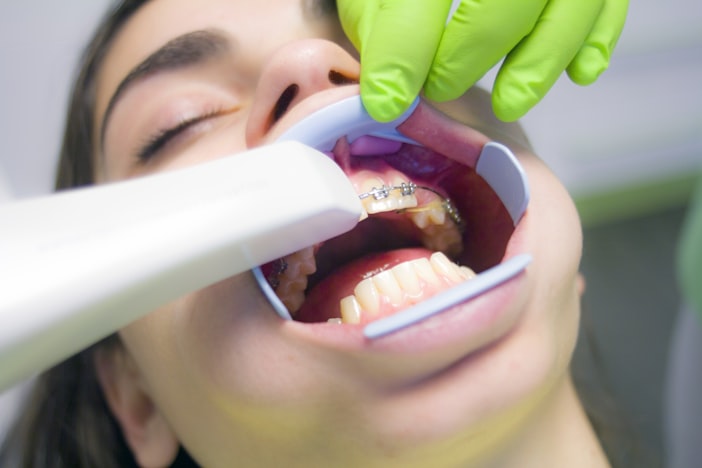
Root canals have a reputation for being long, complicated, gruelling affairs. And for molars, that reputation has some basis: multiple canals, complex anatomy, two-hour procedures, and costs that climb above £1,000.
Front teeth are a completely different story. One canal. One root. One hour. A front tooth root canal is the simplest, fastest, and most affordable root canal there is, with a success rate above 95%. If there's such a thing as a good root canal to need, this is, well, the one.
Why Front Teeth Are So Straightforward
The anatomy is the whole story here. A front tooth has a single root containing a single canal, which is typically straight, wide, and easy to access. Compare that to a premolar (one or two canals), a lower molar (two or three), or an upper molar (three or four, sometimes more), and you can see why the front tooth version is a fundamentally different proposition. Each extra canal multiplies the time, the complexity, and the cost.
The dentist can see directly into the back of a front tooth without the contortions required to reach a molar. The instruments navigate in a straight line from crown to root tip. There are fewer surprises: no hidden canals lurking behind other canals, no tight curves that test the limits of the instruments. The X-ray shows the full canal clearly, and the whole procedure is faster, more predictable, and more forgiving than a root canal on any other tooth.
What Actually Happens
The tooth gets numbed completely (same injection as any dental procedure), and the dentist accesses the canal through the back of the tooth, which is a nice detail because it means the access hole isn't visible when you smile. The infected or dead pulp tissue is removed with fine instruments, the canal is cleaned with antiseptic solution, dried, and filled with a sealing material. A filling closes the access hole, and that's it.
The whole thing takes 45-75 minutes. Some dentists complete it in one visit. Others prefer two: one to clean and medicate, one to fill and seal. Both approaches work well. Either way, it's the kind of procedure that patients often describe as, honestly, borderline anticlimactic compared to what they'd been dreading.
The Cost
Front tooth root canals sit at the low end of the root canal price range, which makes sense given the simpler anatomy and shorter procedure time:
| Treatment | Estimated Cost |
|---|---|
| Front tooth root canal | £600-£800 |
| Premolar root canal | £700-£900 |
| Molar root canal | £1,000-£1,400 |
| Specialist endodontist (any tooth) | Add 30-40% |
At UrgentCare Dental, root canals start from £399 per canal, and because a front tooth has just the single straight canal, it sits right at that simpler, entry-level end. That's the whole reason it's the affordable one: there's only the one canal to clean, shape and seal, so there's less time, less complexity, and less cost to it.
After the root canal, the tooth needs restoring. If the remaining tooth structure is solid, a filling to close the access hole is all that's needed (often included in the root canal fee, or £149-£349 separately). If there's significant structural loss, a crown provides both strength and cosmetic control at £400-£650. And porcelain veneers are another option for front teeth, covering the visible surface for £695 at UrgentCare Dental.
The Colour Question (Which Is Unique to Front Teeth)
This is the one concern that's genuinely specific to front teeth. A root-canal-treated tooth can darken over time, turning slightly grey or yellow compared to its neighbours, because the blood supply is gone and residual blood products in the dentin break down and stain the tooth from the inside.
It's not inevitable though. Thorough cleaning of the pulp chamber during the procedure reduces the staining material, and plenty of root-canal-treated front teeth maintain their colour perfectly well. When discolouration does happen, there's a rather elegant solution: internal bleaching, which is exactly what it sounds like. The dentist opens the back of the tooth, places a bleaching agent inside the pulp chamber, seals it in for a few days, and the tooth lightens from within. It may need repeating once or twice, at about £100-£300 per cycle, but it works genuinely well.
A crown or veneer is the other route, which covers the surface entirely and gives guaranteed cosmetic control regardless of what the underlying dentin does. The point is: however the colour is managed, it's a solved problem. A root-canal-treated front tooth can look completely natural.
Why Front Teeth End Up Needing Root Canals
The causes are a bit different from molars, because front teeth live in the firing line.
Trauma is the big one. A blow to the face from a fall, a sports injury, or an accident can damage the nerve inside a front tooth even when the tooth itself looks completely fine. The impact disrupts the blood supply, and the pulp may die days, weeks, or even years later. A tooth that got knocked in a playground at age eight might need a root canal at twenty-five, long after the original incident has been forgotten. Which is fascinating and slightly unsettling in equal measure.
Deep decay that reaches the pulp chamber is the other route. Front teeth are actually less prone to decay than molars (simpler shape, easier to clean), but cavities between front teeth, often from acid erosion, can reach the nerve. Previous dental work can also stress the pulp over time: a front tooth that's had deep fillings, crown preparation, or composite bonding has had its pulp pushed a bit with each procedure, and there's a cumulative limit.
Sometimes the first sign is simply the tooth darkening. No pain, no sensitivity. Just a gradual colour change compared to the neighbours, and an X-ray that reveals a shadow at the root tip: a quiet infection from a nerve that died without fuss. The root canal resolves both the infection and the darkening in one go.
Recovery
Recovery from a front tooth root canal is the mildest version there is. The tooth is tender for a day or two (biting into an apple produces a wince), but by day three it feels essentially normal. Ibuprofen and paracetamol handle the discomfort comfortably, and the transition from "I just had a root canal" to "I forget I had a root canal" is remarkably quick.
Common Questions About Front Tooth Root Canals
Is it worth getting a root canal on a front tooth?
Almost always, yes. Saving the tooth keeps your own natural root sitting in the jaw, and that root is what holds the neighbouring teeth in line and keeps the bone around it from shrinking back. A front tooth is also the most visible tooth you own, so keeping the real thing, root and all, beats any replacement for looking and feeling like you. And since this is the simplest, quickest root canal there is, you're saving that tooth in about an hour.
How long will a front tooth root canal last?
A front tooth root canal is the most predictable kind there is, so it tends to last beautifully: often ten to twenty years, and frequently the rest of your life once the tooth is restored properly. The reason it holds up so well is that single straight canal, because there's less that can be missed when there's only one path to clean and seal. If you want the full picture on what makes a treated tooth go the distance, we dig into how long root canals last separately.
Is a front tooth root canal cheaper?
Yes, and reliably so. A front tooth has one root and one straight canal, where a back molar can have three or four twisting ones, so there's simply less work: less time in the chair, fewer instruments, fewer surprises. That lands the front tooth version at the low end of the range every time. At UrgentCare Dental it's the same price whichever tooth needs it, from £399 per canal, and the single-canal front tooth is the most straightforward of the lot.
Getting Assessed
At UrgentCare Dental, the emergency appointment is £20, and if the diagnosis turns out to be a root canal, treatment can often begin the same day. The consultation involves an X-ray showing the full root and canal, plus nerve tests (cold test, electric pulp test) to determine whether the nerve is alive, dying, or gone. IV sedation is available from £249 for patients with dental anxiety, though many people find a front tooth root canal under local anaesthetic comfortable enough that sedation isn't needed.
Front teeth occupy the most visible real estate in your smile. Saving one with a root canal preserves the natural tooth, the natural root, and the natural alignment of the arch. An hour in the chair, a couple of days of mild tenderness, and the tooth carries on as if nothing happened. For a procedure with such a fearsome reputation, the front tooth version is, honestly, remarkably undramatic.
Want the real number for your case?
An article can only give you a range. The £20 appointment gets you a fixed quote from a dentist who has actually looked. Extractions from £149, implants £1,999, and 0% finance on treatments over £500.
Or see every price on one page →