Clear Aligners
Cheapest Clear Aligners in the UK: What You'll Actually Pay in 2026


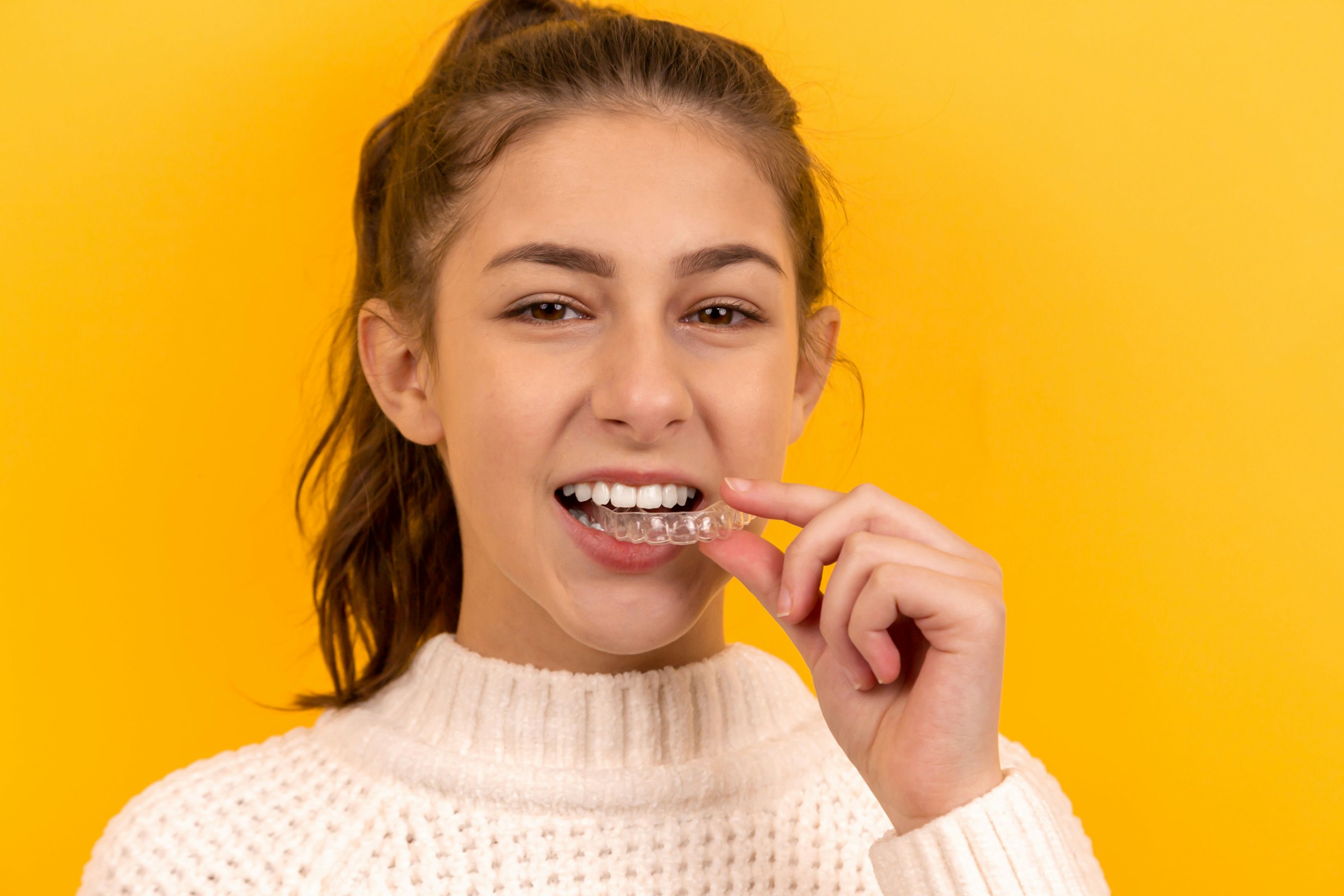
You'd be forgiven for assuming that with most things in dentistry, cheap and good are pulling in opposite directions. That if you want the proper version, the price climbs, and the budget version makes some quiet little trade-off you'll discover later.
So this is going to sound a touch odd. In clear aligners, in the UK, in 2026, those two ends of the market have done something genuinely curious. They've moved towards each other.
The cheapest clear aligners worth buying have come down to about £1,500 to £1,800 for a full course of treatment. And the funny thing is, that's now exactly the same price as the postal kits people used to think of as "the cheap option." Same money, very different proposition. A real dentist looking at a real mouth, a 3D scan of your roots and your bite, and retainers in your hand when it's all done. At UrgentCare Aligners it's from £999, with all of that in.
So let's walk through the whole price landscape, because the interesting part isn't just where the cheap end sits. It's the shape of the thing in 2026, and how the same set of trays can cost £999 in one practice and £4,500 in another a few miles down the road. Once you can see that shape, the right number to pay falls out of it almost by itself.
The short version: the cheapest fully-supervised clear aligners in the UK now cost about £1,500 to £1,800 all-in, with a real dentist, a 3D scan, and retainers included. At UrgentCare Dental they start from £999 (trays designed and made in our own UK lab, everything bundled into the one number), which works out at roughly £23 a month on finance.
Here's the whole price map at a glance, so you can find where your case is likely to sit in a couple of seconds:
| Route | Typical UK price | Supervision | At UrgentCare Dental |
|---|---|---|---|
| At-home / postal kit | £600–£1,800 | None (remote review) | Not offered |
| Cheapest supervised | £1,500–£1,800 | Full, in person | From £999 (UK-lab trays, all-in) |
| Mid-market practice | £2,500–£3,500 | Full, in person | From £999 |
| Premium branded (Invisalign) | £3,500–£5,500 | Full, in person | Not offered |
And on finance, that £999 becomes about £83 a month at 0% over 12 months (no interest, the total stays exactly £999), or roughly £23 a month spread over the longer 60-month plan at 12.9% APR. There's more on how that works further down.
The UK Price Map for Clear Aligners
Clear aligners across the UK fall into three rough bands, and where you sit depends on what your smile actually needs (a quick front-teeth tidy-up versus a fuller arch reshape), where in the UK you're being treated, and whether you're paying for the famous brand on the box.
At the top of the market sit the big-name branded systems, most famously Invisalign, running £3,500 to £5,500 for full-arch treatment across most of the country. Central London nudges the top end higher, sometimes to £6,000 for the deeper, more involved cases. That premium reflects two things at once: a very sophisticated treatment-planning platform that handles harder movements well, and the brand itself. A meaningful slice of that price tag, honestly, is the name on the box.
The middle band sits at £2,500 to £3,500, where most reputable UK practices cluster. This is where you find dentist-supervised aligners using technology that's clinically comparable to the headline brands, with the same monitoring, the same retainers, just without the premium for the famous logo. UrgentCare Dental's clear aligners start from £999, sitting well below this band, with scans, every aligner in the sequence, check-ups throughout, and retainers at the end all rolled into one number.
And then there's the lower band, £1,500 to £2,200, where the shift has happened. Some of this is still postal-kit territory, which we'll come to in a minute. But increasingly, it's UK clinics with their own production cutting out a whole layer of cost that used to sit in the middle of the chain. UrgentCare Aligners starts from £999 because the trays are designed and made in our own UK lab, rather than being shipped in from a third-party factory at retail markup. Same dentist seeing you every six weeks. Same retainers. Same in-person supervision the whole way through. Just fewer hands in the middle, and that saving lands in your monthly payment.
So the cheapest supervised aligners in the UK in 2026 live roughly between £1,500 and £1,800. Below that, you're either looking at a very simple correction (one or two teeth, a few months of treatment) or you've slid across into mail-order territory, which is a different conversation.
Where the Money Actually Goes
Aligners look, to a layperson, like fancy plastic. And the trays themselves are fancy plastic, in a sense: medical-grade thermoformed polyurethane, around £15 to £30 a tray for the lab to make. You wear twenty to forty across a course of treatment, so the physical product comes to maybe £600 to £1,200 at the top end of materials cost.
That's a sliver of what you're actually paying for, though. Understanding the rest is what tells you whether a £999 quote and a £4,500 quote are doing the same job.
Think of your teeth less like a row of shoes and more like a tightly-packed bookshelf. You can't just shove the third book over to where you want it; the books either side are pinning it in. To make space, you have to nudge the books either side first, and those books have their own neighbours pinning them. Every single push has to be sequenced against every other push, in the right order, with the right amount of force.
That's what an aligner course is. An ordered series of fractional movements, each one calculated against the previous and the next. A tooth pivots two degrees, then translates half a millimetre, then rotates a touch as the tooth beside it shifts. Every tray accounts for which teeth anchor against which, where the bite has to land, the small compromises that come up when the ideal positioning isn't quite achievable. That work takes hours of clinician time, and increasingly involves treatment-planning software that costs the practice meaningful licensing fees per case.
So the real money's going into the planning. The plastic is just how it gets delivered.
Real teeth are also a little unpredictable in motion: one might want to settle slowly, another to run ahead of plan. So the dentist seeing you every six to eight weeks fine-tunes the trajectory as the smile unfolds. They're not ornamental in the chair; they're the bit that keeps the whole thing on the path it was planned for.
Once the last tray comes out, there's also a piece of clear plastic that holds the new smile in place for the years that follow. The good retainers keep it sharp for a decade-plus. Any honest aligner package includes them; they're the punctuation mark at the end of the sentence.
The Mail-Order Question
Now this bit's properly interesting, because of where the pricing has ended up.
There are still UK companies selling clear aligners through the post: kitchen-table impression kit, virtual review, trays arrive a few weeks later. The price for that route runs £1,200 to £1,800. The supervised-in-clinic route, at the cheap end, runs £1,500 to £1,800.
So the gap that used to make the postal version tempting has, well, more or less closed.
Which changes the question entirely. It used to be "do I pay more for the dentist, or save the money and skip them?" In 2026, for the same money, the dentist's there too. A 3D scan of your roots and the inside of your mouth before anything moves. A look at the gums and the bite at the start, by someone who's done thousands of these. An actual person in the chair seeing you every six weeks as the teeth settle into their new positions. Retainers in your hand at the end. All of that bundled in at the cheap end of the supervised market, at a price the postal kits used to undercut.
Smile Direct Club going under at the end of 2023 was the moment this shift became visible. They were the giant of the at-home space, and the economics of running a postal aligner business at scale had quietly been getting harder for years. Meanwhile, the UK clinics with their own labs had become a genuine option at the same price point. By the time the dust settled, supervised had become the obvious place to look at the bottom of the market. The British Orthodontic Society has been saying the same thing in its position statements since 2019: clear aligners want a dentist in the room. (If you were one of the stranded SDC patients in the UK, the good news is that most of those cases can be picked up by a real clinic without starting over.)
So the supervised cheap end has quietly become the obvious place to look in 2026. The trade-off it used to involve mostly isn't there anymore.
Why Some Practices Cost More Than Others
Here's the bit that's genuinely fascinating. Two practices in two different cities can charge £4,500 and £999 for what is, materially, the same treatment. Same plastic, same number of trays, same dentists with the same qualifications. So what's the £3,500 doing?
Well, a practice on Harley Street pays rent that's an order of magnitude higher than a practice in Leeds or Manchester. That cost has to come out of every treatment that happens in the building, including aligners. So the same set of trays, planned by an equally qualified clinician, costs more in central London because the building costs more. There's nothing mysterious about it: you're paying for the postcode.
A general dental practice that does aligners as one treatment among many is also placing far fewer cases than a dedicated aligner clinic, and paying retail markup on every set as a result. The bigger operations either negotiate dramatically better lab pricing or, increasingly, bring the production in-house. That's why UrgentCare Aligners can be priced where they are: the trays are designed and made in our own UK lab, which removes a whole layer of margin from the chain. The lab's profit becomes the practice's, and that saving lands straight in the price you pay.
Now, as you'd imagine, you're also paying for the brand name with Invisalign (for example), though it's worth knowing that how 32Co stacks up against Invisalign usually comes down to the dentist planning your case rather than the name on the tray. Invisalign's parent company spends serious money on direct-to-consumer marketing and on the planning software clinicians use, and that cost shows up in your quote whether or not your particular case actually needs the platform. For mild-to-moderate cases (which is the majority of what walks through any general dental practice) it usually doesn't. For genuinely complex multi-arch cases with serious bite work, the premium planning platform can be worth it. For straightening out the bit of crowding that's bothered you since teenage braces came off? Probably not.
What doesn't really vary between competently-run practices, of course, is the standard of care. The dentist who plans your case at a £999 practice spent the same five years at dental school as the one at the £4,500 practice. Both are registered with the General Dental Council, which holds everyone to the same clinical bar. The check-ups happen on the same schedule. The retainers come from the same kind of supplier. What the extra money buys, where it's bought, is location and branding. Not clinical quality.
What's Actually in the Price
A headline number on a quote usually has a few bits sitting just outside it. Worth knowing what makes up the all-in, so you can compare quotes properly across practices.
Sometimes teeth land slightly off the original plan and need a top-up set of trays, usually four to ten more, to get them home. Some practices roll those refinements into the headline price. Others charge £400 to £900 for them at the end, and that's the kind of thing that quietly turns a £999 quote into a £1,700 one. So it's worth asking about up front.
As we said, retainers belong in every package too. If they're not in, that's another £150 to £350 sitting just outside the headline. Replacement retainers down the line will cost something every two or three years as they wear out, but that's true everywhere.
A few practices also charge £50 to £150 for the initial scan and consultation whether or not you proceed. Others, including UrgentCare Dental, do aligner consultations free, with no obligation either way.
And whitening can go either way too. Some packages roll it in, some treat the £200 to £550 of teeth whitening you might want at the end as a separate add-on. Same goes for any composite bonding you might want for shape adjustments once the teeth are in their new positions, or for closing tiny gaps between teeth that aligners alone don't fully address.
So when you're comparing quotes between practices, ask each one for the all-in figure: planning, every tray in the sequence, refinements if needed, retainers, check-ups, the consultation itself. Compare those numbers, not the headlines. A £2,200 quote with everything included is a better deal than a £1,800 quote with three things waiting to be added later.
Finance Brings the Numbers Down Further
A quote of £999 still isn't a small amount of money, and the reality is that very few people drop a thousand pounds on dentistry in a single transaction. Which is why most reputable UK practices offer some form of dental finance.
At UrgentCare Dental, finance comes in two forms. For treatments over £500, 0% interest finance is available over 12 months. So a £999 clear aligner treatment becomes about £83 a month for a year, no interest, no fees, the total stays exactly £999. Or there's the longer 60-month plan at 12.9% APR for any treatment amount, which brings UrgentCare Aligners at £999 down to about £23 a month.
Now, that second number reframes things. £23 a month is roughly what people pay for streaming subscriptions they barely use. Spread across five years, with retainers included and a dentist seeing you every few weeks during the active treatment, the monthly cost of a properly supervised set of clear aligners ends up sitting alongside the phone bill rather than competing with it.
Think about it. Twelve months from now, the streaming subscription will have given you, what, six shows you half-watched? The aligners will have given you the smile you've been thinking about for years. Same monthly hit, very different outcome.
Where Aligners Fit in the Bigger Picture
Clear aligners are an excellent fit for a specific kind of thing: mild-to-moderate crowding, gaps, slight rotations, teeth that have shifted since childhood braces came off. For those situations they're often the kindest, least visible, and most flexible option going.
For other concerns, though, there are usually faster routes. If your concern is the colour of your teeth more than their position, teeth whitening is what you actually want, and it's far cheaper. If individual teeth are chipped or worn but otherwise well-placed, porcelain veneers or composite bonding do more for the smile than straightening would. And if you've got a combination of things going on, a proper smile makeover plan often involves a small amount of straightening followed by a few other refinements, which can come in cheaper overall than full-arch aligners on their own.
The teeth-straightening options for adults article goes deeper into that comparison. The short version: aligners are wonderful for what they're for, and knowing whether they're the right tool for your specific smile is the first thing a free consultation tells you. Sometimes the cheapest aligner is no aligner at all.
Common Questions About Cheap Clear Aligners
What is the cheapest way to straighten your teeth in the UK?
For actually moving the teeth (rather than just whitening them, which is a different job), clear aligners are usually the most affordable route, because they need far less chair time than fixed braces and the trays are quick for a lab to produce in a batch. The cheapest supervised aligners sit around £1,500 to £1,800 across the UK, and UrgentCare Aligners start from £999 with a dentist, scans, and retainers all in. For a very small tidy-up of one or two front teeth, a short course can come in lower still.
What's the cheapest supervised clear aligner?
The supervised cheap end of the UK market runs roughly £1,500 to £1,800 for a full course, and that's the figure worth comparing against, because it's the point where you still get a real dentist in the room rather than a postal kit. UrgentCare Aligners come in below that from £999, because the trays are designed and made in our own UK lab rather than bought in at retail markup, so a whole layer of cost simply drops out of the price.
Are cheap at-home aligners safe?
At-home kits skip the in-person check that catches the things a photo can miss, like the state of your gums or the way your bite actually meets, which is why the British Orthodontic Society has recommended a dentist in the room since 2019. The reassuring part in 2026 is that you no longer have to choose between cheap and supervised: a fully monitored course now costs about the same as the postal route used to, so the safer option has quietly become the sensible-value one too.
How much is Invisalign Express?
Invisalign Express is the shorter, lighter version aimed at minor cases, and it's where the branded system is at its most affordable, usually from around £1,500 upward. It's built for small corrections rather than a full reshape, so if your case is bigger you may be quoted the fuller Invisalign treatment instead. UrgentCare Aligners cover that same mild-to-moderate ground from £999.
How much do ClearCorrect aligners cost in the UK?
ClearCorrect is one of the dentist-supervised aligner systems, a close cousin of the better-known brands, so it sits in the same supervised band rather than the postal one. In practice that means somewhere between about £1,000 and £5,500 depending on how much movement your case needs and where in the country you're treated, the same spread as any dentist-led aligner. Our own supervised aligners start from £999 and cover the mild-to-moderate cases most people are actually asking about.
Do cheap aligners include retainers?
The honest packages do, because retainers are what hold your new smile in place for the years afterwards, and a course without them is a job left half-finished. It's the single most useful thing to check on any cheap quote: if retainers aren't in, that's another £150 to £350 waiting just outside the headline. UrgentCare Aligners include them from the start.
Can I pay monthly for clear aligners?
Yes, and it's how most people do it, because very few of us drop a four-figure sum on dentistry in one transaction. At UrgentCare Dental a £999 course comes to about £83 a month at 0% over 12 months (no interest, the total stays £999), or roughly £23 a month spread over the longer 60-month plan at 12.9% APR. That second figure lands the cost of a properly supervised set of aligners somewhere near a monthly streaming bill.
Where the Real Number Lands
So, to bring all this together. The cheapest fully-supervised clear aligners in the UK in 2026 cost about £1,500 to £1,800 for a comprehensive package. The middle band, £2,500 to £3,500, gets you in-practice care with familiar dentists and well-established systems for the more involved cases. The premium band, £3,500 to £5,500, adds brand and the planning-software premium, which earns its keep on genuinely complex multi-arch work and rarely on the standard cases.
UrgentCare Aligners starts from £999 with retainers, full in-person supervision, and trays designed and made in our own UK lab. The lower edge of the supervised band, with the dentist included rather than skipped. For more involved cases that need deeper planning, our clear aligners cover the same ground as a typical Invisalign Full case for a meaningfully smaller bill.
If you're curious what the result might actually look like on your specific teeth before booking anything, you can preview your new smile from a single photo. It's a lovely sanity-check before any consultation: you see the destination before you commit to the journey.
The headline number on a quote matters. What's sitting behind it matters more. The genuinely good news, in 2026, is that the cheapest aligners and the right aligners are now closer to the same thing than they've ever been.
So if you'd been holding off because the four-grand quote made it all feel out of reach, that's the bit worth knowing. The world has moved.
Want Straighter Teeth?
Clear aligners from £999, or from £23/month at 12.9% APR over 5 years. Free consultation included.
Or see how clear aligners fit with our other treatments →