Dental Emergency
Cracked a Tooth? A Crown Almost Always Sorts It


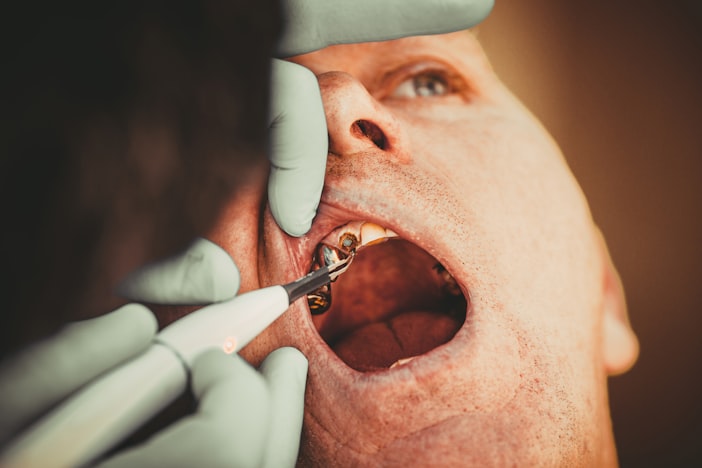
So you've cracked a tooth. Not a big deal, honestly. Most cracked teeth just need a crown on top, which takes a single appointment, and that's the whole thing.
A crown's a cap that wraps around the tooth and holds the crack clamped so tightly it can't flex open anymore. And a crack that can't flex can't jab the nerve, can't hurt you, and can't progress. Pain stops pretty much straightaway, the tooth goes on being one of your normal teeth for another fifteen or twenty years, and most of our patients walk out mildly surprised at how straightforward the whole thing turned out to be.
If it's only just happened and you're standing there unsure what to do this very second, our quick run-through of what to do in a dental emergency, and what it costs walks you through it, from hanging onto any broken piece to softening a sharp edge so it stops catching your tongue until we can see you.
Let's go through what's happening in there, which kind of crack you've likely got, and what the whole thing'll cost.
What the Pain Is Actually Doing
You know that weird thing where it hurts on biting, then stops the second you stop biting, then hurts again later on something else, but only sometimes? That's the absolute signature of a cracked tooth, and it's happening because of a physical thing going on in the tooth that's fairly straightforward once you know it.
The crack is running down through the tooth, and every time you bite on it, the two sides of the crack flex apart by a fraction of a millimetre. That flex stimulates the nerve underneath and makes it hurt. Then you release the bite and the two sides close back together and the pain stops. The inconsistency of it (why some days are fine, why some foods do it and others don't, why the tooth feels normal half the time) is because the flex depends on exactly where you bite and how hard. If you're still not sure whether that's what's going on, because there's no visible cavity and nothing obviously wrong with the tooth, our piece on why a tooth hurts when biting down with no cavity in sight walks through the other likely culprits too.
Which is, once you understand it, quietly good news. The fix doesn't need to heal anything or kill anything off. It just needs to stop the flex. And stopping the flex is exactly what a crown does.
The Different Kinds of Cracks You Might Have
Not all cracks are the same, and it's worth knowing what you've likely got because the treatment (and the cost) shifts a bit depending.
The simplest are craze lines. These are tiny hairline cracks in the outer enamel, and most adults develop them over the decades. You can sometimes see them if you catch the light right. They don't hurt, they don't need treating, and they don't go anywhere interesting. If your dentist mentions them during a check-up, it's a "these are here, they're fine" observation and that's genuinely the end of it.
A step up is when a whole cusp (one of the pointed peaks on a molar or premolar) breaks away. This usually happens on a tooth that had a big filling in it which had been quietly weakening the surrounding tooth for years. You often know the moment it happens: a crunch while eating, and there's a piece of something hard in your mouth that turns out to be part of your tooth. Not a dramatic thing to sort out, though. A smaller break gets a filling or an onlay, and a larger break gets a crown that caps the whole tooth and restores the strength. Filling is £149 to £349. Crown is £650 at UrgentCare Dental.
Then there's the proper cracked tooth, which is what most people are thinking of when they Google this. A vertical crack running down from the biting surface toward the root, flexing every time you bite, exactly the thing we were talking about in the last section. This is the one that drives people up the wall with the on-again-off-again pain. A crown fixes it, full stop, as long as the crack hasn't reached the nerve yet. If it has reached the nerve, root canal treatment clears the affected pulp and then a crown goes on top. Tooth saved either way. Crown on its own is £650, or £1,250 to £2,050 for the root canal plus crown combined.
And then there are the rare cases where the crack has gone too deep to save the tooth. Sometimes a crack has split the tooth into two separate pieces, or a crack has travelled upwards from the root tip (these are usually very old root-canalled teeth finally giving up). In those cases the tooth does come out, and we have a conversation about replacing it with an implant, a bridge, or a denture. Small minority of cases though, and genuinely not what's most likely happening with yours.
How We Actually Find the Crack
This is where it gets a bit like detective work, because cracks are often completely invisible on x-rays. The fracture line can be too fine for the x-ray to pick up, or oriented the wrong way for the beam to catch it. A proper cracked tooth can show up as a perfectly normal-looking x-ray.
So we use a bite test. A small instrument, one cusp at a time, looking for the sharp pain on release that's the dead giveaway of a flexing crack. We'll also shine a bright light through the tooth from the side, which is called transillumination: a crack shows up as a shadow because light can't pass through the fracture line. And if the case is complicated, a CT scan picks up cracks that everything else missed.
By the end of the appointment we'll know which tooth, how deep the crack's gone, and whether the nerve's involved. Which tells us whether you're looking at a crown on its own or a crown with a root canal underneath.
Why Teeth Crack
Few reasons this tends to happen.
Big fillings are the main structural cause. When a filling replaces most of a tooth, the walls of real tooth around the filling are thinner than they used to be, and thin walls crack more easily than thick ones. Which is why dentists often recommend crowning a heavily filled tooth before it cracks, to save everyone the bother later.
Grinding is the behavioural one. Night-time clenching applies heavy, sustained forces to specific teeth for hours at a time, and those forces find whichever tooth is structurally weakest. Grinders crack teeth at a much higher rate than non-grinders, so if you know you grind, a nightguard is one of the better investments you can make in long-term tooth survival.
Biting hard stuff can certainly crack a tooth if you're unlucky or just bite down that little bit too forcefully at the wrong angle. Ice cubes, unpopped popcorn kernels, olive pits, the corner of a hard cracker. The occasional bottle cap that really no-one should ever be biting on in the first place. Most of the time you get away with it. Occasionally you don't.
And as you might have guessed, age plays a role too. Cracked teeth are most common between about forty and sixty, as decades of chewing forces slowly add up. And previous root canal treatment weakens a tooth internally, which is why a root-canalled tooth should have a crown put on reasonably promptly afterwards.
What It Costs at UrgentCare Dental
All laid out below, nothing hidden, costed in writing before any treatment starts.
An emergency appointment is £20. That covers the clinical exam, the bite test, the transillumination, and any x-rays we need. If a crown's the answer, the crown itself is £650. If it turns out a root canal's needed first, the root canal runs £600 to £1,400 depending on the tooth, and the crown goes on after. In the rare cases where a tooth can't be saved, an extraction is £100 to £600 and then we talk about what replaces it.
0% finance over 12 months is available on all of this, which turns a £650 crown into roughly £54 a month. For most people it makes a decent difference to how the cost lands, and it keeps the decision about whether to sort the tooth from being a decision about whether you can afford to sort the tooth.
Why It's Worth Getting in Soon
Not the kind of thing that needs A&E over a dentist, but worth booking in over the next week or two rather than leaving it for a few months. The reason is straightforward once you know it: the crack is progressing every time you bite on the tooth, because every bite drives it a fraction deeper. A crack that's currently above the nerve is a crown job. A crack that's reached the nerve is a crown plus a root canal. A crack that's gone below the gum line is usually the tooth out.
None of that happens overnight. But a few weeks of normal eating on a cracked tooth can walk the crack from the first bracket into the second, and a few months of it can walk it further still. Getting in soon keeps you in the crown-only zone, which is the cheapest and simplest place to be.
Come In and Let Us Have a Look
Emergency appointments at UrgentCare Dental are £20 and available the same day you call. If the fix is a crown, we can often start prepping the tooth in that same visit. IV sedation from £249 is there if you'd prefer to be deeply relaxed through a longer procedure, and the finance covers the whole lot.
Don't stress about the tooth. Come in, let us have a look at it, and let's sort it.
Broken tooth or lost filling? Usually a quick fix.
£20 emergency appointment today. These are among the quickest repairs we do, and you'll know the exact price before anything starts.
Or see every emergency treatment, with prices →