Veneers
Dental Veneer Problems: What Can Go Wrong, What's Normal, and What to Do


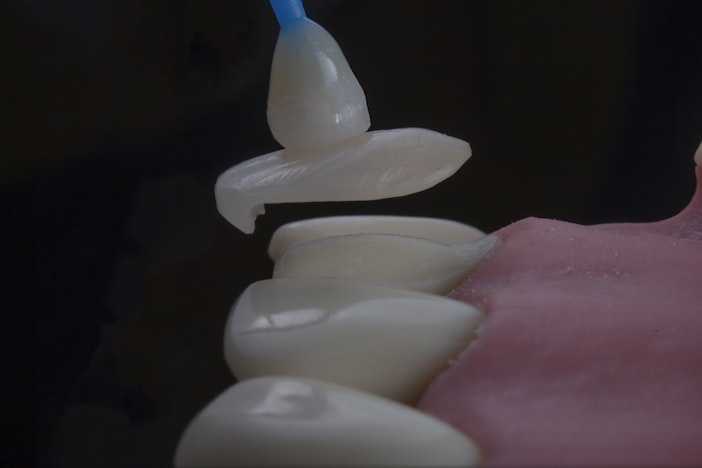
Your veneers went on, the transformation was everything you'd hoped for, and the mirror became a friendlier place. Then, weeks or months or years later, something has changed. A tiny chip at the edge. A veneer that feels slightly loose when you prod it with your tongue. Sensitivity to cold that wasn't there before. A thin dark line appearing at the gum margin. And now you're doing that very familiar thing of prodding the area obsessively and googling at 11pm, which is exactly what we'd like to help you stop doing.
The good news, and this is genuinely the headline, is that almost every veneer problem is fixable, most are preventable, and the proper catastrophic failure rates are actually very low. Once you understand what can happen and why, each potential issue goes from being a mystery to being a known thing with a known solution. Which is a much nicer place to be than prodding at it at 11pm.
At UrgentCare Dental we see the full range of veneer issues, from tiny edge chips to Turkey-teeth disasters, and the vast majority of what comes through our doors is either a quick fix or a manageable plan. So let's walk through what's going on, what's normal, what isn't, and what each thing costs to sort out properly.
The short version: the veneer problems we see most are chipping, debonding (a veneer working loose or coming off), early sensitivity, and colour mismatch, and almost every single one of them is fixable, usually quickly and often in a single visit. If a veneer has already chipped or fallen off, keep the piece safe if you have it and come in for a £20 assessment: we will tell you honestly whether it needs a polish, a rebond, or a replacement, and put the price in writing before anything happens.
Veneer Chipping and Fracture (The Most Common Problem By Far)
You're biting into a piece of crusty sourdough the way you've done a thousand times, and something gives. A tiny edge of porcelain is suddenly sitting on your tongue. It's unsettling, it's annoying, and it's also by some distance the most common thing that goes wrong with veneers.
Here's a detail worth understanding, because it tells you a lot about why veneers chip. Porcelain veneers are typically 0.3-0.5mm thick. That's thinner than a credit card. Thinner than most pieces of paper, actually.
When you look in the mirror at a veneered smile, you're looking at restorations that are barely there in physical terms, bonded onto the front of your teeth like the delicate little shells they are. They're genuinely strong in their intended direction of force (biting straight down), but the thinness means they're more vulnerable to lateral stresses, edge loading, and point impacts.
Corn on the cob. Ice. Hard sweets. The absolutely classic one: bottle caps, which real human beings genuinely try to open with their front teeth, apparently unaware that they've got a porcelain shell on there that was not designed for mechanical engineering tasks. A natural tooth might shrug those forces off because it's part of a living, flexing root-and-bone system. A veneer, bonded rigidly to the front of that tooth, has less give.
The reassuring part is that small edge chips are usually an easy fix. We smooth and polish the edge to restore the contour, and in about 20-30 minutes you're out the door with a £50-£150 bill and a functionally sound veneer. The polished area may have a slightly different surface texture from the original glazed porcelain up close, but cosmetically it's usually invisible. Larger chips or fractures that expose the underlying tooth do mean replacement: the old veneer gets ground off (it's bonded on, so it doesn't just lift), we take a new impression, and a new veneer gets fabricated and bonded. That's the full porcelain veneer fee again at £695 per tooth, or £300-£1,200 across the UK generally.
And here's something genuinely worth knowing about composite bonding as an alternative: composite chips more readily than porcelain (softer material), but it has a rather wonderful secret advantage, which is that repairs happen chairside in a single visit. The dentist adds new composite to the chipped area, sculpts it, polishes it, done. £50-£150, no impression, no lab waiting time, no going home with a temporary. This repairability is one of the genuine strengths of composite over porcelain, and it's a big part of why a lot of patients choose it despite the shorter lifespan.
Why Do Veneers Come Loose? (Debonding Explained)
There's a very specific little moment that happens with debonding. You're running your tongue across your teeth one morning and you feel it: a tiny shift, barely perceptible, when you press on one of the veneers. Or, more dramatically, a veneer pops off entirely while you're eating and leaves you staring at the prepared tooth surface underneath with a veneer sitting in your hand.
What's actually happened is that the adhesive bond between the veneer and the tooth has failed. And interestingly, this tells you something about how clever veneers are in the first place, because the adhesive has to grip onto both the ceramic of the veneer and the tooth structure simultaneously, and the chemistry of that is not trivial.
When debonding happens, it's usually for one of three reasons. Sometimes contamination during the original placement (saliva or blood getting onto the bonding surface) prevented the adhesive from gripping properly; those cases tend to show up within the first few months.
Sometimes decay has crept in at the margin where the veneer meets the tooth and undermined the bond from the edge. That's a maintenance issue, and a good reason to keep flossing carefully around veneer margins.
And sometimes teeth grinding (bruxism) is putting sustained repetitive force on the bond night after night, fatiguing it until something gives. A night guard is the straightforward protection for grinders, and it's often the single most important thing for veneer longevity in someone who clenches or grinds.
If a veneer comes off cleanly and the tooth surface underneath is intact, we can often rebond it. Clean it up, check everything, cement it back on, and it's all sorted in one appointment. The usual cost of this tends to be £50-£150, but if the veneer broke when debonding happened, it does still need replacement.
The big thing to remember, if a veneer does comes off, is always keep it! Wrap it in tissue, pop it in a small container, bring it to the appointment. A veneer that's been lost down the kitchen sink or swallowed in a bite of dinner can't be rebonded. You might be surprised, but we do get asked that from time to time. The reason is that it's just not hygienic enough to be safe, even if "cleaned."
Is Tooth Sensitivity After Veneers Normal?
That first sip of cold water after getting veneers can be a jolt. A sharp little zing through the tooth that wasn't there before. Completely normal, and there's a genuinely fascinating reason for it that we think is worth explaining, because it helps the whole thing make sense.
Preparing a tooth for a veneer means removing a tiny layer of enamel from the front surface (0.3-0.5mm for porcelain, less for minimal-prep veneers). Under that enamel is dentin, which is the layer that contains fluid-filled microscopic tubules connected all the way to the nerve of the tooth.
When temperature changes, the fluid in those tubules moves, and the nerve picks up on the movement. That's the sensation you're feeling. The veneer covers and seals those tubules once it's bonded on, but the seal isn't always perfect from day one, and so for the first few weeks you can get some sensitivity while everything settles.
What's genuinely cool about this is how your body resolves it. Over 2-6 weeks, the tubules calcify themselves from the inside, essentially sealing off the connection between the outside world and the nerve. Your tooth is quietly repairing itself, closing up the channels that were exposed by the preparation. Desensitising toothpaste helps during this period too (the potassium nitrate in those formulations calms the nerve response), but the main work is being done by your own biology.
Sensitivity that lingers beyond 6-8 weeks, or sensitivity that starts months after placement, is a different matter. That might mean there's a gap at the veneer margin letting fluid through, or that the preparation got too close to the nerve in the first place and the nerve hasn't settled down. In rare cases, a tooth prepared for a veneer ends up needing root canal treatment because the preparation stressed the nerve beyond its ability to recover. If sensitivity isn't settling after a month or two, please come in and have it looked at.
Why Veneers Can Look Different in Different Lights
Colour matching might be the most underappreciated craft in cosmetic dentistry, and the subtlety of it genuinely surprises most patients.
Your veneers looked absolutely perfect under the bright, balanced LED lighting in the dental surgery. Then you got home and they looked slightly different. Then you went outside and they looked different again. Then you sat down at your desk under the fluorescent tubes at work and noticed a third version.
The thing happening here is something called metamerism, which is the phenomenon where two objects can look identical under one light source and different under another, because different light sources emit different wavelength mixes and objects reflect those wavelengths differently depending on their pigment makeup.
Quality ceramic veneers are matched under multiple light sources at the lab to minimise this effect, but a completely metamerism-proof veneer isn't really physically possible. Slight shifts under different lights are part of the territory.
More obvious mismatches tend to happen when veneers go on some teeth but not others, or simply when the shade or shape genuinely isn't what you pictured once they're fixed in place. Four front teeth get veneered, but the canines and premolars stay natural, and suddenly the contrast between the bright new veneers and the older natural teeth is quite visible. The solutions are either whitening the natural teeth to match up, or extending the veneer plan to include more teeth so there's a seamless transition.
Staining is another chapter worth understanding. Composite veneers can pick up colour over time from the usual culprits: coffee, tea, red wine, curry, tobacco. Porcelain veneers resist staining beautifully because the glazed surface repels most staining agents, but the composite cement at the very edges of a porcelain veneer can stain, creating a dark line where the veneer meets the tooth. Professional cleaning and polishing restores the composite surfaces and cleans those margins on porcelain veneers, and it's part of routine hygiene visits, not something that requires veneer replacement.
What Happens When Gums Recede Around Veneers?
This tends to be a decade-plus issue rather than an early problem, but it's worth understanding because it's the one that eventually shapes the lifespan of a veneer smile.
Gum tissue naturally recedes over time, slowly revealing more tooth surface at the top of the tooth where the gum used to sit. That happens to natural teeth too; the difference with veneers is that the boundary where the veneer ends and the natural tooth begins gets exposed, and that boundary becomes visible as a thin dark line on porcelain or a slight colour change on composite. Recession gets faster with aggressive brushing, with gum disease, and with age in general.
The options for dealing with exposed margins are: extending the veneer by remaking it with a slightly different shape that covers the newly exposed area, adding composite bonding at the margin to cosmetically close the gap, or gum grafting (which we'd refer to a periodontist for) to restore the gum tissue to its original level. Veneers that were placed with margins slightly below the gum line at the start (a common aesthetic choice) have a longer grace period before recession exposes the edge. It's the same reasoning that comes up when someone's gums have already receded before their veneers even go on: the gum line has to be settled and stable first, or the margin you're building against just keeps moving underneath you.
Turkey Teeth Problems (A Category of Their Own)
The problems that come back from veneers done abroad, particularly in Turkey, are a completely different beast and deserve their own conversation.
We need to be honest about this because it matters. A genuine veneer is a thin shell of porcelain or composite bonded to the front of an intact tooth. What's often sold as "veneers" abroad, at those holiday-package prices, is something very different: full crowns placed after aggressive tooth reduction, where the teeth are ground down to small pegs and then covered entirely. A veneer preserves tooth structure. Aggressive crowning removes it, permanently. You can never undo having your teeth ground down to pegs, and that fundamentally changes the rest of your dental life.
What we see, typically 2-5 years after Turkey teeth are done, is a cascade: widespread debonding, decay forming under restorations that weren't fitted properly, gum disease around poorly-finished margins, and a painful discovery that corrective treatment in the UK usually costs more than the original work abroad did. It's heartbreaking for patients who went looking for a good smile on a budget and ended up in a much worse position than before. If this is your situation, please don't despair: we can help. But we'd always gently steer anyone considering veneers toward getting them done properly in the UK in the first place, because the real cost isn't the sticker price, it's the cost of fixing things when they go wrong.
How Long Do Veneers Last?
Porcelain veneers last 10-15 years on average, with many going strong past 20. The failure rate is around 5% at 10 years, meaning 95% of porcelain veneers are still doing their job a decade later. Composite veneers last 5-7 years on average; they're more susceptible to staining, chipping, and wear, but they're also more affordable and much more easily repaired when things happen.
The cost-per-year maths is genuinely interesting when you run it. Porcelain at £695 lasting 12 years works out to about £58 a year. Composite at £199 lasting 5 years works out to about £40 a year. The annual cost ends up in a similar ballpark; what differs is how often the work needs revisiting, and that's really the thing to weigh when choosing between them.
How to Prevent Veneer Problems
Most veneer problems are preventable with a handful of straightforward things that become habits quickly.
A night guard (occlusal splint) is the single most cost-effective thing anyone who grinds their teeth can do. £100-£300 for the appliance, and it protects veneers from the repetitive overnight forces that debond and chip them. If you've ever been told you grind your teeth, or you wake up with a sore jaw, or your partner has mentioned the noise, this is worth doing.
Being thoughtful about hard foods and front teeth is the next layer. Apples sliced first rather than bitten into whole. Ice that you sip around rather than crunch on. Chocolate broken by hand not teeth. Back teeth for crushing, front teeth for clean biting. It's not a dramatic lifestyle change, just a gentle awareness.
Oral hygiene at the veneer margins keeps decay and gum disease from undermining the bond. The veneer itself can't decay, but the tooth underneath it absolutely can, and the margin is where attention matters most. Floss daily at the gum line, brush carefully along that boundary.
Regular dental check-ups catch early problems before they grow. A small chip smoothed today is a £80 appointment. The same chip allowed to propagate into a fracture becomes a replacement veneer at £695. Early always beats late, and that's true for veneers as much as for anything else in dentistry.
Common Questions About Veneer Problems
What are the most common problems with dental veneers?
Chipping is far and away the most common, simply because a veneer is a thin shell (often just 0.3 to 0.5mm of porcelain) bonded to the front of the tooth, so an edge can catch on something hard like ice or a hard sweet. After that comes debonding, where a veneer works loose or pops off completely; then early sensitivity to cold while the tooth settles in the first few weeks; and colour mismatch, including the thin dark line that can appear at the gum margin as the years go by. The genuinely reassuring part is that every one of these has a known, usually straightforward fix, which is exactly what the rest of this page walks you through.
Why do dentists advise against veneers?
When a dentist is cautious about veneers, it is almost always about one thing: enamel. Preparing a tooth for a traditional veneer means gently removing a thin, permanent layer of enamel, and enamel does not grow back, so it commits that tooth to being restored from then on. That is precisely why we like to talk it through properly first, look at whether a minimal-prep approach or even simple whitening and bonding might suit you better, and make sure veneers are genuinely the right call for your smile. A £20 assessment is the honest place to have that conversation, with no pressure and no sales pitch either way.
What happens after 10 years of having veneers?
For porcelain veneers, ten years is usually still comfortably within their working life: the average is 10 to 15 years, and only around 5% have failed by the decade mark, which means roughly 95% are still doing their job a decade on. What tends to show up around this stage is the slow and natural stuff rather than sudden failure: a little gum recession revealing the margin where the veneer meets the tooth, some surface wear, or the occasional small chip, all of which are fixable. Composite veneers run a shorter 5 to 7 years, though they are also much easier and more affordable to refresh when that time eventually comes.
Booking Your Veneer Assessment
If you've got a veneer issue right now, whether it's a tiny chip you can just about feel with your tongue or a full-on debonded veneer sitting in an envelope somewhere, come and see us. A £20 consultation at UrgentCare Dental covers the examination, the X-ray if needed, and a clear plan for what to do next. We'll tell you honestly whether it's a quick polish, a rebond, a replacement, or something more involved, and we'll give you the cost on paper so you know where you stand.
And if you're still at the considering-veneers stage rather than the have-them stage, the consultation covers that too, including the question we get asked all the time at that point, whether veneers are ever available on the NHS. We offer composite bonding from £199 per tooth and porcelain veneers at £695 per tooth, and we'll talk you through which suits your situation, your budget, and your mouth properly. No pressure, no sales pitch, just a warm proper conversation about what would work for you.
Come and see us when you're ready.
Ready for Your Dream Smile?
Composite bonding from £199, veneers from £695. 0% finance available on treatments over £500.
Or see all our cosmetic treatments, with prices →