White Spots
Why Do I Have a White Spot on My Tooth? Causes and Fixes


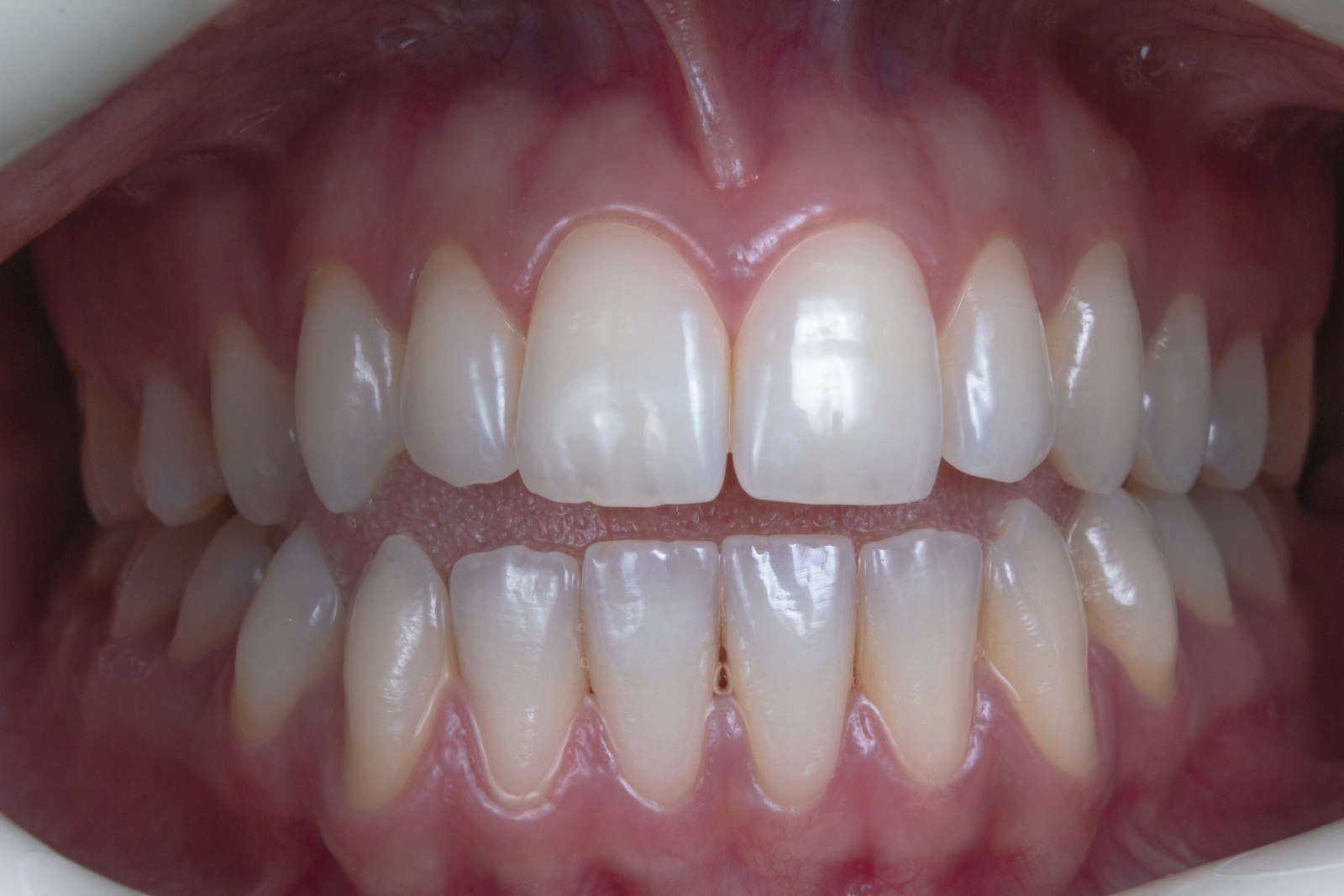
You've spotted a chalky white mark on a tooth, and now it's all you can see when you smile. Take a breath, because in the vast majority of cases a white spot is harmless, and there's a good chance we can make it fade or blend right in.
Let's work out what yours actually is, since white spots come from a handful of very different causes and the right fix depends entirely on which one you've got. We'll go through each, tell you when a spot is worth acting on, and lay out the ways to make it disappear.
What a White Spot Really Is
Here's the simple idea underneath all of this. Your tooth's surface, the enamel, is normally smooth and even, so light bounces off it uniformly and it all looks one shade. A white spot is a patch where the enamel is a little different, usually because it's lost some of its minerals or formed slightly unevenly, so light scatters off that spot differently and it shows up brighter and chalkier than the tooth around it.
Think of it like a patch of dry skin, or a watermark on wood: the material is still there, it's just changed texture in one small area so it catches the light in its own way. Once you know that, the four common causes make perfect sense.
Cause One: Early Demineralisation (The One That Can Reverse)
This is the most common cause, and it's also the most hopeful, so let's start here.
When plaque sits on a tooth, the bacteria in it produce acid, and that acid quietly draws minerals out of the enamel underneath. Before that ever becomes a hole, it shows up as a chalky white patch, often right along the gumline or wherever plaque tends to gather. Dentists call this an early or "incipient" spot, and the wonderful thing is that at this stage it hasn't broken through: it's softened, not lost. That means it can often be re-hardened and reversed. Better brushing, fluoride toothpaste, cutting back on constant snacking and sugary drinks, and sometimes a stronger fluoride or remineralising treatment from us can coax those minerals back in and let the spot fade. Catch it early and you may never need anything cosmetic at all.
If you've ever worn braces and noticed white squares appear where the brackets sat, that's this same thing: plaque built up around the brackets and demineralised the enamel there. Same cause, same fixes.
Cause Two: Fluorosis (From Childhood)
The second common cause happened long before you noticed it, back when your adult teeth were forming under the gums in childhood.
If a child takes in a bit more fluoride than needed while teeth are developing, say from swallowing toothpaste, the enamel can form with faint white flecks or patches. This is called fluorosis, and here's the reassuring part: these spots are purely cosmetic. The enamel is actually perfectly strong, often a touch stronger than average, so there's nothing to treat for your health. It's only ever a looks question, and it's a very treatable one when it bothers you.
Cause Three: Enamel Hypoplasia (Thin Enamel)
Sometimes a tooth simply formed with slightly thinner or less complete enamel in one area, which is called enamel hypoplasia.
It can come from a childhood illness, a knock to a baby tooth that affected the adult one growing beneath, or just how that particular tooth developed. These spots can look white or sometimes more yellow-brown, and because the enamel is genuinely thinner there, these teeth can be a little more prone to sensitivity or decay in that spot. So this is the one type where the fix is protective as well as pretty, sealing and rebuilding that area guards the tooth as well as tidying the look. Our guide to sensitive teeth is worth a read if that patch twinges with hot or cold.
Cause Four: A Dry Mouth Overnight (The One That Vanishes)
This one catches people out and it's the least worrying of all. If you slept with your mouth open, or you're a bit dehydrated, the enamel can dry out and temporarily look chalky-white, especially at the front.
The tell is that it fades away on its own within an hour or two of your mouth rewetting. So if a white patch appears in the morning and is gone by lunchtime, it was almost certainly just dryness, and there's genuinely nothing to do about it.
So, Are White Spots Harmful?
For the most part, no, and that's worth hearing plainly. Fluorosis and dryness are cosmetic only. Early demineralisation is a gentle warning sign rather than damage, and it's reversible. Enamel hypoplasia is the one that occasionally needs a protective eye kept on it, but even that is easily managed once we know it's there.
The reason to get any new or changing spot looked at isn't fear, it's simply that an early demineralised patch and the very first hint of a cavity can look similar to the untrained eye, and one wants encouraging while the other wants catching. A quick check tells you which, and that peace of mind is worth a lot. Our guide to what a dental checkup covers explains what that look involves.
How We Make White Spots Blend Away
Now the part you really want: the cosmetic fixes, from gentlest to most complete.
For a mild spot, the first move is often the simplest: improve the enamel's health and let it settle, sometimes with a remineralising treatment, and see how much fades. For fluorosis and stubborn surface spots, a technique called microabrasion gently polishes away the very outer layer where the discolouration sits, evening out the shade, and it's wonderfully conservative because barely anything is removed.
When a spot needs actually covering rather than coaxing, composite bonding is the star. We shape a thin layer of tooth-coloured resin straight over the spot to blend it seamlessly into the rest of the tooth, in a single visit, from £199 a tooth, with none of your healthy enamel drilled away. It's the best-value way to make a white mark simply disappear, and you can read the honest case for it in our piece on whether composite bonding is worth it.
For a fuller, longer-lasting transformation, especially if there are several marks across your smile, porcelain veneers from £695 a tooth give a flawless, stain-resistant finish. If you're torn between the two, our veneers versus bonding comparison lays the choice out plainly. And a quick word of caution: if you're tempted to whiten the whole tooth to hide a spot, teeth whitening sometimes makes a white patch stand out more at first before things even up, so it's worth a chat before you start rather than after.
The Simplest Way to Know
You can't always tell from the mirror whether your white spot wants encouraging, polishing, or simply covering, and that's completely normal, because the causes look alike from the outside.
Our £20 emergency and assessment appointment includes X-rays and a proper look, so we can tell you exactly what your white spot is, whether it needs anything for your health, and the neatest way to blend it away if you'd like it gone. Most people leave pleasantly surprised at how small a job it turns out to be, and how good a smile can look once that one distracting mark is settled.
Ready for Your Dream Smile?
Composite bonding from £199, veneers from £695. 0% finance available on treatments over £500.
Or see all our cosmetic treatments, with prices →