Wisdom Teeth
Impacted Wisdom Teeth: What It Means, What It Costs, and When They Need to Come Out

The dentist has just looked at your X-ray and used the word "impacted." And your brain, which was hoping for something simple and straightforward, is now doing that thing where it fills in the gaps with worst-case scenarios. Impacted sounds serious. It sounds like something embedded, stuck, deeply wrong.
The reality is a lot more ordinary than the word suggests, and a lot more common. About 70% of adults have at least one impacted wisdom tooth. It's not a condition or a disease. It's the natural consequence of a human jaw that evolved to be smaller than the teeth trying to fit inside it.
An impacted wisdom tooth is simply one that doesn't have enough room to emerge properly. It's stuck, either fully under the gum, partially through, or wedged against the neighbouring tooth at an angle. The tooth itself is fine. The space it's trying to occupy isn't.
The Four Types
This is where it gets genuinely interesting, because impacted wisdom teeth don't just sit there randomly. They arrange themselves in specific patterns, each with its own name and its own implications for removal.
Mesioangular impaction is the most common, accounting for about 44% of all impacted wisdom teeth. The tooth is tilted forward, angling toward the front of the mouth. Picture a tooth leaning against its neighbour like someone dozing off on a train. The crown of the wisdom tooth pushes into the root of the molar in front of it, and left long enough, it can damage that neighbouring tooth.
The good news about mesioangular impactions: they're generally considered the most straightforward to remove. The forward angle means the tooth tends to follow a natural path out when the dentist works it loose. It's the most common type and the one with the most predictable removal.
Vertical impaction is the second most common. The tooth is in the correct orientation, pointing straight up (or down, in the upper jaw), but it's trapped beneath the gum because there's simply no space for it to emerge. It's trying to do the right thing. The jaw just won't let it.
Vertically impacted wisdom teeth are sometimes the ones that don't need removing at all. If the tooth is sitting comfortably under the gum, not pressing on anything, not causing pain, and not developing pathology on the X-ray, it can sometimes be left alone and monitored. The monitoring part is key: a yearly X-ray confirms nothing's changed.
Horizontal impaction is the one that makes people wince when they see the X-ray. The tooth is lying completely on its side, parallel to the jawbone, like it's decided to take a nap rather than erupt. Horizontally impacted wisdom teeth sit deep in the bone and press sideways against the neighbouring molar's root.
Horizontal impactions are more complex to remove because of their position and angle. The dentist typically needs to section the tooth, cutting it into pieces that can be removed individually, rather than extracting it whole. It's a longer procedure but follows well-established surgical techniques.
Distoangular impaction is the rarest type, where the tooth tilts backward, away from the neighbouring molar and toward the back of the jaw. Despite being least common, it's often considered the most technically challenging to remove. The backward angle means the tooth is moving away from the natural extraction path, and the surgeon has to work against the tooth's orientation.
What Impaction Feels Like (And When It Feels Like Nothing)
Here's the thing that surprises people: many impacted wisdom teeth cause no symptoms at all. They sit quietly under the gum for years, decades even, not causing any trouble. The impaction shows up on a routine X-ray, and the patient had no idea anything was there.
When symptoms do appear, they tend to follow a pattern.
Pain at the back of the mouth, particularly when chewing or opening wide, is the most common first sign. The pain might radiate into the ear, the temple, or the jaw joint, and that temple ache is often how wisdom teeth end up causing headaches. It can come and go, flaring up for a few days and then settling, which is why a lot of people put up with it for months before seeking help.
Swelling and redness in the gum behind the last visible molar is classic pericoronitis, where the gum tissue over a partially erupted impacted tooth becomes inflamed and infected. This is the most common reason impacted wisdom teeth go from "silently impacted" to "emergency dental appointment." If your wisdom teeth are long gone and you're still noticing a swollen gum behind your back tooth, trapped food or gum infection around that last molar is usually the cause instead.
Pressure on neighbouring teeth can cause a dull ache that's hard to localise. The wisdom tooth pushing against its neighbour transmits force through the dental arch, and the pain can feel like it's coming from several teeth at once.
Jaw stiffness and difficulty opening the mouth fully can indicate inflammation from an impacted tooth, particularly if it's in the lower jaw where the surrounding muscles are affected.
A bad taste in the mouth, particularly around the area of a partially erupted wisdom tooth, signals bacteria accumulating under the gum flap. The taste is the early warning of pericoronitis developing.
The X-Ray Conversation
The relationship between impacted wisdom teeth and X-rays is important, because the X-ray tells the story that the symptoms alone can't.
A panoramic X-ray (OPG) shows all four wisdom teeth, their angles, their depth, and crucially, their relationship to two important structures: the inferior alveolar nerve in the lower jaw (the nerve that provides sensation to the lower lip and chin) and the maxillary sinuses in the upper jaw.
The nerve proximity is the critical factor for lower wisdom teeth. The roots of lower wisdom teeth can sit very close to or even wrapped around the inferior alveolar nerve canal. If the roots and the nerve are intimate on the X-ray, the dentist may request a CT scan for a three-dimensional view before proceeding with extraction. Damage to this nerve, while uncommon, can cause temporary or (rarely) permanent numbness in the lower lip and chin.
The X-ray also reveals whether the impacted tooth has caused any damage to the neighbouring molar. Decay on the back surface of the second molar, caused by bacteria trapped in the gap between it and the impacted wisdom tooth, is one of the strongest arguments for removal. That decay will progress as long as the wisdom tooth stays.
Removal: What It Involves
Removing an impacted wisdom tooth is a surgical extraction rather than a simple "pull." The distinction matters for both the experience and the cost.
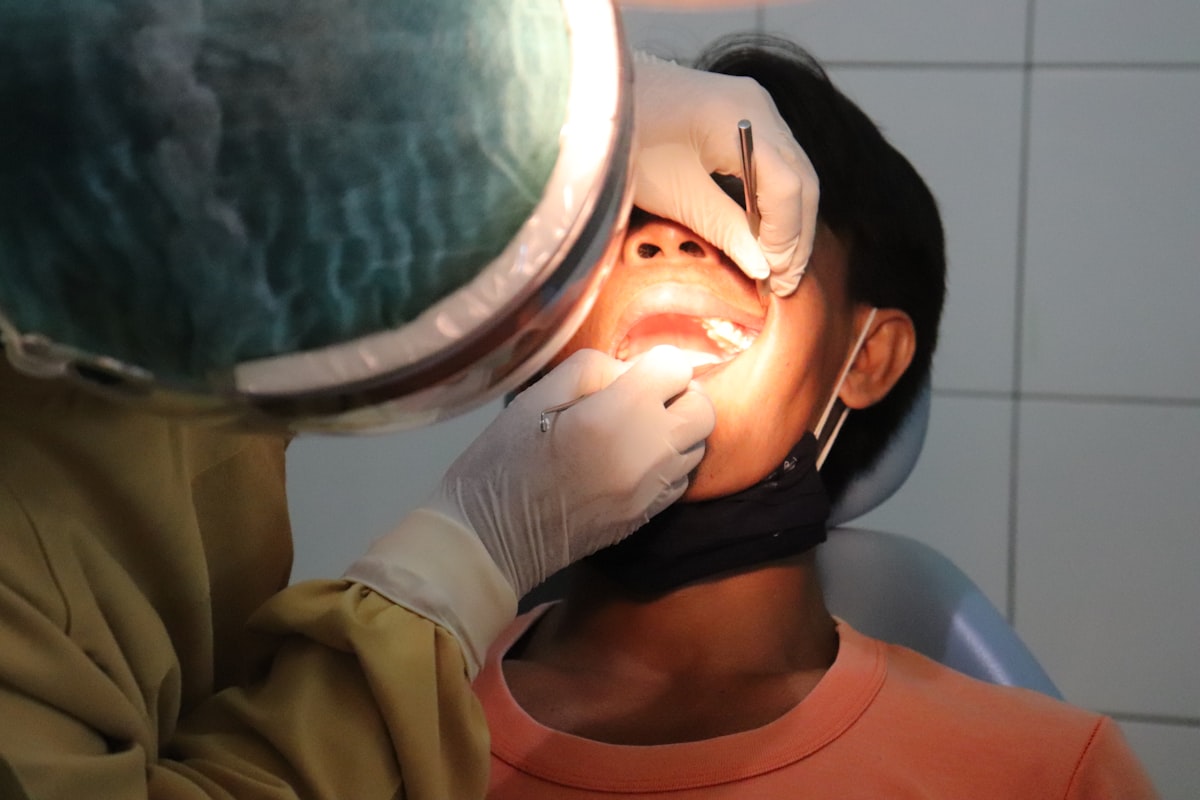
The dentist numbs the area with local anaesthetic. For impacted teeth, particularly those deeper in the bone, IV sedation is a popular choice. At UrgentCare Dental, the combined extraction with sedation package is £695. Under sedation, the procedure happens, the tooth comes out, and you don't remember any of it.
A small incision opens the gum tissue to expose the tooth and surrounding bone. If bone is covering the tooth (common with fully impacted teeth), a small amount is carefully removed to access the crown of the tooth.
For mesioangular and vertical impactions, the tooth may come out in one piece once enough access is created. For horizontal impactions and deeply impacted teeth, sectioning is common: the tooth is divided into two or three pieces using a drill, and each piece is removed individually. This sounds more dramatic than it is. Sectioning actually reduces the amount of bone that needs to be removed, which means less surgical trauma and faster healing.
The socket is cleaned, irrigated, and closed with dissolvable stitches. The whole procedure takes 20-45 minutes per tooth.
The Cost
Impacted wisdom tooth removal costs more than a simple extraction because of the surgical complexity involved.
At UrgentCare Dental, wisdom tooth removal is £549 per tooth. The combined extraction and IV sedation package is £695.
Across the UK, surgical wisdom tooth extraction ranges from £200-£600 per tooth at private practices, depending on the complexity and the region.
For all four wisdom teeth, the total runs £800-£2,400 at most practices, or approximately £2,196-£2,780 at UrgentCare Dental depending on whether sedation is used for some or all.
The recovery timeline is 5-7 days for the acute phase, with full bone healing over 6-8 weeks. Most people are back at work within 2-3 days.
Leave Them or Remove Them?
The question of whether impacted wisdom teeth should be removed if they're not causing symptoms is one of the most debated topics in dentistry.
The case for removal is strongest when the X-ray shows a clear trajectory toward trouble: a mesioangular impaction pressing on the neighbouring molar, a partially erupted tooth with a recurring pericoronitis history, or signs of cyst formation around the impacted tooth (rare but significant).
The case for monitoring is strongest when the tooth is fully buried under the gum, vertically oriented, not pressing on anything, and showing no pathological changes on X-ray. These teeth can sit quietly for an entire lifetime without ever needing intervention.
The middle ground, where most impacted wisdom teeth sit, involves weighing the likelihood of future problems against the risks and costs of preventive removal. Younger patients (late teens to twenties) tend to heal faster and have fewer surgical complications, which is one argument for earlier removal. Older patients with asymptomatic impactions that have been stable for years have a reasonable case for leaving well alone.
The conversation with the dentist, X-ray in hand, is where this decision gets made properly. Every impaction is different: the angle, the depth, the nerve proximity, the condition of the neighbouring teeth. The right decision depends on the specific clinical picture, and a good dentist will explain why they're recommending what they're recommending.
At UrgentCare Dental, the assessment of impacted wisdom teeth includes X-ray imaging and a thorough discussion of whether removal is recommended and why. For impacted teeth that do need to come out, IV sedation makes the experience one that you genuinely won't remember. For teeth that can safely be left, honest monitoring saves unnecessary surgery.
Either way, "impacted" stops being a scary word once you understand what it actually means. A tooth that ran out of room. That's all. And whether it stays or goes, the path forward is clear.
Need Emergency Dental Care?
Same-day appointments from just £20. Open 24 hours, 7 days a week.
Or see every treatment we offer, with prices →