Wisdom Teeth
Pericoronitis: The Wisdom Tooth Gum Infection That Keeps Coming Back


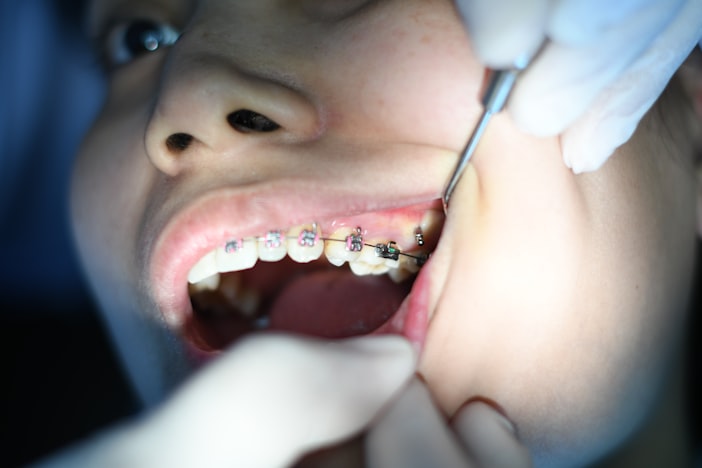
There's a flap of gum at the back of your mouth that has decided to make your life miserable, and every time you chew, the tooth above lands right on the sore bit. Take some comfort in this: it's one of the most ordinary things we see, and it calms down quickly once somebody gets underneath that flap and cleans it out.
Pericoronitis is inflammation of the flap of gum left half-covering a tooth that has only partly come through, nearly always a lower wisdom tooth. Food and bacteria gather in the little pocket under the flap where no toothbrush can reach, the gum swells up around them, and that gives you the soreness, the strange taste, and the stiff jaw that brought you here.
The short version: pericoronitis is treated by cleaning out the infected gum flap, with a dentist flushing the pocket while warm salt water rinses at home settle things down, and antibiotics only if the infection has started to spread. The fix that actually lasts is removing the wisdom tooth, or the flap of gum over it, because that takes away the little pocket the infection keeps coming back to.
If you're in the thick of a flare-up right now and just want to settle it down, our run-through of what to do in a dental emergency, and what it costs has a wisdom-tooth section with the calming steps to take tonight and the honest prices alongside.
Pericoronitis is the most common complication of wisdom teeth, and it's the reason a great many people end up needing an emergency wisdom tooth appointment. The name sounds obscure and clinical, and yet the experience is dismally familiar to millions of people: a gum infection that flares up, gets treated, settles down, and then comes back. The cycle can repeat for years. Understanding why it happens, and why it keeps happening, makes the path out of it much clearer.
How Pericoronitis Is Treated
Here's the whole path, from the first flare through to the thing that ends it for good:
-
Cleaning and irrigation. Your dentist loads a syringe with antiseptic and flushes it right under the gum flap, washing out the trapped food and bacteria that are feeding the infection. It's usually the single most relieving thing that happens, because you often feel the difference within hours.
-
Warm salt water rinses at home. A teaspoon of salt in a glass of warm water, swished gently around the sore area three or four times a day, lowers the bacterial load and draws some of the fluid out of the swollen tissue. It's the home step that takes the edge off a flare while you wait to be seen.
-
Antibiotics, but only if it's spreading. When the swelling starts moving up toward your eye or down toward your neck, or you've got a fever and feel genuinely unwell, antibiotics bring it back under control. A flare that's stayed local usually doesn't need them, because clearing the pocket removes the fuel and your own body handles the rest.
-
Removing the wisdom tooth, or the gum flap over it. This is the only step that stops pericoronitis coming back. Taking the wisdom tooth out removes the pocket entirely, and for a healthy, well-positioned tooth, removing just the gum flap (a small procedure called an operculectomy) can do the same job.
Here's what that costs with us, so you can see it at a glance:
| Treatment | Cost at UrgentCare Dental |
|---|---|
| Emergency assessment (seen today, X-ray, and a firm price) | £20 |
| Wisdom tooth removal, the definitive fix | £549 per tooth |
| Extraction with IV sedation | £695 (all in) |
The £20 assessment gets you seen and gives you the exact price of the fix before you commit to anything. It's the same £20 on a Sunday as on a Tuesday, and £50 if you're seen after 11pm. That matters here, because pericoronitis has a habit of peaking at exactly the hour when everything else has shut.
Pericoronitis Symptoms: What It Actually Feels Like
Pericoronitis has a signature, and once you've had it you'll recognise it instantly. What people notice first is the flap itself. Run your tongue along behind your last tooth and you'll feel it: puffy, soft and sore in a way the same spot on the other side simply isn't, with the gum around it looking red and angry. It's nearly always the lower left or the lower right, at the very back, because that's where the wisdom teeth live.
Then there's the pain that spikes when you bite. The tooth above lands on that swollen flap with every mouthful, squashing inflamed tissue between two hard surfaces, which is why eating is so often the worst part of the day. Alongside it comes a taste you can't shift, somewhere between metallic and rotten. It rises from the debris sitting in the pocket rather than from your teeth, which is why brushing and mouthwash barely dent it.
The jaw stiffens up as well. Muscles around an inflamed area tighten to protect it, so your mouth opens two fingers wide instead of three and eating a sandwich starts to feel like a stretch too far. Dentists call that trismus, and it loosens again as the swelling settles.
The bigger flares add a few more things. Tender glands under the jaw, because the lymph nodes puff up a little while they filter out what the infection is producing. Sometimes a sore throat on that side, since the back of your mouth sits closer to your throat than it feels. And a day or two of being generally under par, occasionally with a mild temperature. Most of the time, though, it's the puffy flap, the biting pain and the taste, and nothing beyond that.
What Causes Pericoronitis, and Why It's Nearly Always a Wisdom Tooth
The anatomy is beautifully simple. Wisdom teeth arrive last, usually in your late teens or twenties, by which point the jaw is already fully occupied. So rather than coming all the way up, a wisdom tooth very often surfaces halfway and stops, and a flap of tissue called the operculum stays draped over the part that never made it out.
That flap creates a pocket. A warm, dark, damp pocket that food particles and bacteria find irresistible. Every meal pushes a little more debris under there. Brushing can't reach it. Flossing can't get into it. The pocket is essentially uncleanable by normal, sensible tooth-brushing, and that's worth saying plainly, because people so often assume a flare-up means they've let their standards slip. They almost never have. The spot simply can't be cleaned from the outside.
Bacteria colonise the trapped food and multiply. The gum tissue becomes inflamed in response. The inflammation causes swelling, which makes the pocket even deeper and harder to clean. More bacteria, more inflammation, more swelling. The cycle escalates over a few days from "slightly tender" to "I can barely open my mouth."
If the upper wisdom tooth, or any opposing tooth, bites down on the swollen gum flap, it bruises the tissue further and adds a mechanical injury on top of the infection. That's why pericoronitis so often feels worst when you're eating: every bite compresses inflamed tissue between the teeth.
The Two Versions
Pericoronitis comes in two forms, and knowing which one you're dealing with helps calibrate the response.
Acute pericoronitis is the dramatic one. Rapid onset of pain, significant swelling around the wisdom tooth, difficulty opening the mouth, possibly a fever, and sometimes facial swelling spreading beyond the gum into the cheek. This is the version that sends people to the emergency dentist. It develops over two or three days and asks to be dealt with.
Chronic pericoronitis is the slow-burn version. Mild, dull discomfort around the wisdom tooth that comes and goes. A slightly bad taste in that area. Occasional tenderness when chewing. It's annoying rather than debilitating, and it's the version that people live with for months or years, never quite bad enough to seek treatment, never quite good enough to forget about.
The chronic form has a habit of converting to acute. A stretch of stress or bad sleep, a cold that has your immune system busy elsewhere, or simply a bit of food that wedges in deeper than usual can tip the balance from mild irritation to full-blown infection within a couple of days. Which is why pericoronitis has such a talent for turning up in the middle of an already difficult week.
What the Dentist Actually Does
When acute pericoronitis sends you in, the immediate treatment follows a consistent pattern, and it's a lot gentler than the state of your jaw might lead you to expect.
The area gets examined. Your dentist checks how far the swelling extends, looks at whether the infection is staying local or starting to travel, and takes an X-ray to see the wisdom tooth's position and whether anything deeper is going on. That X-ray earns its place: the angle of the tooth is what decides whether the long-term answer is the flap or the whole tooth.
Irrigation is usually the most immediately helpful thing that happens. A syringe loaded with antiseptic solution flushes under the gum flap and washes out the debris and bacteria fuelling the infection. The relief is often noticeable within hours, because the pressure inside the swollen tissue is a large part of what you've been feeling.
Antibiotics come into it when the infection has spread beyond the local area: swelling moving up toward the eye or down toward the neck, a fever, tender glands under the jaw, or you're feeling genuinely unwell with it. That's a prescribing decision your dentist makes on the day after looking at you, and if you do need them, you'll be told exactly which ones and exactly how to take them. Localised pericoronitis that hasn't spread usually doesn't need them at all, because the irrigation removes the fuel for the infection and your own immune system finishes the job over a few days.
If the opposing upper tooth is biting on the swollen flap and making everything worse, your dentist may smooth or slightly adjust that biting surface so the tissue gets a rest.
This immediate treatment works. Within a week the area settles, the pain goes, the swelling resolves, and your mouth opens normally again.
And then, somewhere between three weeks and six months later, it happens again.
What Helps at Home While You Wait
None of this fixes pericoronitis, and it isn't trying to. It buys you comfort until the pocket gets properly cleaned out. Here's what people commonly do in the meantime.
Warm salt water rinses are the one nearly everybody lands on, and with good reason: a teaspoon in a glass of warm water, three or four times a day and again after eating. Gently is the operative word, because a vigorous swill just aggravates a tender flap.
A water flosser on its lowest setting, or a syringe without a needle, can flush the pocket under the gum flap and dislodge the trapped food that's feeding the whole thing. Warm water, aimed at the gap between the flap and the tooth. What comes out can be surprisingly substantial, and the relief of getting it out is immediate.
Ordinary painkillers from the chemist, taken as directed on the packet, keep things comfortable while the swelling comes down. If you'd like the fuller picture on what genuinely helps a painful tooth and what doesn't, we've written about the best thing for toothache separately.
Soft food, chewed on the other side, keeps the upper tooth off the swollen flap. When every meal is compressing inflamed tissue, simply eating elsewhere in your mouth for a few days does more good than it sounds like it should.
Will Pericoronitis Go Away on Its Own?
Honestly? A mild one often does. The trapped debris works its way out, the swelling goes down over a few days, and plenty of people ride out an episode on salt water and patience alone. So if you're hoping it'll settle by the weekend, that hope is entirely reasonable.
The honest answer, then, is yes and no. A flare can quieten by itself; the condition doesn't end on its own, because the pocket that feeds it stays put until somebody removes the flap or the tooth.
Why It Keeps Coming Back
This is the bit that matters, and it's the reason pericoronitis drives people to distraction.
The antibiotics clear the infection. The irrigation cleans the pocket. But the anatomy hasn't changed. The gum flap is still there. The pocket is still there. The warm, dark, food-trapping environment that bred the infection in the first place is still there, ready for the whole process to start again.
With the flap still in place, recurrence is the rule rather than the exception, which is exactly what you'd expect of a pocket nobody can clean. Some people get a second episode. Plenty get a third and a fourth, each one following the same pattern: flare, treatment, relief, a quiet spell, flare.
And there's a cost to that which never shows up on any invoice: the uncertainty. Never quite knowing when the next one is coming. The cancelled plans, the meals eaten carefully on one side, the low-grade awareness that the back of your mouth could start up again at any point. For most people who've been round the loop two or three times, that's the part that finally decides it, rather than the money.
The Fix That Ends It: Taking the Tooth Out
Removing the wisdom tooth removes the operculum, removes the pocket, and removes the environment that breeds pericoronitis. Once the tooth is out, pericoronitis cannot recur in that spot. The cycle breaks permanently, because the thing the infection was living in has gone.
The old rule about timing was a mandatory wait: antibiotics first, then extraction a week or two later once the tissue had calmed down. Modern practice has moved past that default. Better nerve-block technique handles anaesthesia even in inflamed tissue, which means same-day or same-week extraction is genuinely possible for most localised episodes. If the infection has spread beyond the local area and the tissue is too reactive to anaesthetise comfortably, a short course of antibiotics first to stabilise things is still the right call, and that's a judgment based on what your dentist actually sees rather than an automatic wait.
Wisdom tooth extraction at UrgentCare Dental is £549 per tooth, the same price whether the tooth lifts straight out or turns out to need surgical access, so an awkward one doesn't quietly become a bigger bill. With IV sedation, the combined package is £695. The recovery takes about a week, with the first two or three days being the ones you'll want to keep gentle.
One week of recovery against years of recurring infections. That's the real trade, and for most people who've been through more than one episode of pericoronitis, the sum does itself.
Operculectomy: The Middle Ground
There's a procedure that sits between repeated antibiotics and full extraction: operculectomy. The gum flap itself is removed, leaving the wisdom tooth in place while eliminating the pocket that trapped food and bacteria.
It's a smaller job than an extraction. The gum tissue is removed under local anaesthetic, and the healing takes about a week. It isn't a standard line on our price list, because whether it's even the right option depends entirely on the tooth underneath, so the figure comes from your assessment once somebody has looked at the X-ray with you.
For wisdom teeth that are otherwise healthy and sitting in a good position, an operculectomy can be a permanent solution. Remove the flap, remove the pocket, remove the problem, and the tooth stays and carries on chewing.
The limitation is straightforward. If the wisdom tooth is impacted, badly angled, or likely to cause other trouble later, taking the flap off deals with the pericoronitis and leaves the impaction exactly where it is, so extraction becomes the more complete answer. That's why the recommendation always comes back to the tooth's own position, angle and long-term prospects, and why it's a conversation to have in front of your X-ray rather than a decision to make in advance.
When to See a Dentist About Pericoronitis
Most flares are a grumble, and a grumble will keep until we can see you, which is usually the same day anyway.
A few things are worth ringing about sooner rather than sitting on. Swelling that's spreading across the cheek or down the neck. A jaw that's getting harder to open rather than easier. A temperature along with that properly run-down feeling. Or a flare that simply isn't budging after a couple of days of rinsing. None of those mean something dreadful is happening. They mean the infection has outgrown what salt water can do on its own, and it's a far easier thing to settle early than late.
There's one line worth carrying, and then you can stop scanning yourself for symptoms: if swallowing or breathing ever becomes genuinely difficult, treat that as urgent and ring 111 or go to A&E, because a spreading mouth infection needs same-day medical care. It's rare. It's also the only thing on this page that can't wait for a dental appointment.
Common Questions About Pericoronitis
How do you get rid of pericoronitis fast?
The fastest relief comes from emptying the pocket under the gum flap, because that's where the infection is being fed. At home, warm salt water rinses and a gentle flush with a water flosser or a needle-free syringe shift the trapped food, and an ordinary painkiller from the chemist keeps you comfortable while the swelling drops. That settles a flare, though the quickest route to being properly rid of it is having a dentist irrigate the flap, since they can reach far deeper than you can at the bathroom sink.
Can pericoronitis heal itself?
A mild flare often does quieten down on its own once the trapped debris works its way out, and plenty of people ride out an episode on salt water rinses alone. The snag is that the gum flap is still there afterwards, so the pocket that caused it is still there too, which is why it tends to come back. Settling down and healing aren't quite the same thing here.
What triggers pericoronitis?
It's set off by food and bacteria gathering under the flap of gum that half-covers a partly-erupted wisdom tooth, a spot that brushing and flossing simply can't reach. From there, a stretch of stress, a bout of illness, or just a bit of food that wedges in especially deep can tip a quiet grumble into a full flare within a day or two.
How long does pericoronitis last?
A flare that gets cleaned out properly usually settles over about a week, with the sharpest of it easing in the first day or two once the pocket has been flushed. Left to its own devices, a mild one can grumble along for days and quietly turn into the chronic version that comes and goes for months. The length of any single flare is one question; the pattern is another, and the pattern only ends when the flap or the tooth does.
Do I need to see a dentist for pericoronitis?
For a mild, localised twinge, salt water rinses may well carry you through. But if the swelling is spreading, you've got a fever, your jaw is getting hard to open, or it keeps coming back, that's the point to get it looked at. And if swallowing or breathing ever starts to feel difficult, treat that as urgent and call 111 or go to A&E, because a spreading mouth infection needs same-day care. For the far more common grumbling flare, an emergency assessment with us is £20.
How is pericoronitis treated?
Treatment runs from settling the flare to ending it for good. A dentist flushes the infected gum flap clean, warm salt water rinses help at home, and antibiotics come in only if the infection has spread. The lasting fix is removing the wisdom tooth (£549 per tooth, or £695 with IV sedation), or for a well-positioned tooth, removing just the gum flap, so the pocket the infection keeps returning to is gone for good.
The Pattern-Breaking Appointment
There's something specific about the appointment where pericoronitis finally gets resolved.
For a lot of people, it isn't the first appointment. It's the one after the second or third recurrence, where they sit in the chair and say something like: "I'm done with this. Just take it out."
That moment, the decision to break the cycle, is where things change. The extraction gets booked. The sedation gets arranged if it's wanted. And a week or two later the wisdom tooth is out, the gum flap is gone, and the pocket that caused all those infections is history.
At UrgentCare Dental, pericoronitis is one of the most common presentations we see. The swollen gum, the tight jaw, the frustration of "not this again." And the relief when the tooth finally comes out and the cycle breaks for good. An emergency assessment is £20, we see people the same day, and that visit includes a proper look and an X-ray, so you leave knowing exactly what's going on and exactly what it costs before anybody decides anything. You'll find us at the Whitehall Estate in Armley in Leeds, in Manchester, and on Main Street in Bingley for the whole Bradford district.
The first episode is managed. The second raises the question. The third usually answers it.
That gum flap has bothered you for the last time.
Toothache that won't quit? Seen today.
£20 books an emergency appointment, today. Your dentist gets to the root of it and treats it where clinically possible in the same chair. That is when the pain stops.
Or see every emergency treatment, with prices →