Wisdom Teeth
Wisdom Tooth Pain (What's Causing It and What It Costs to Fix)


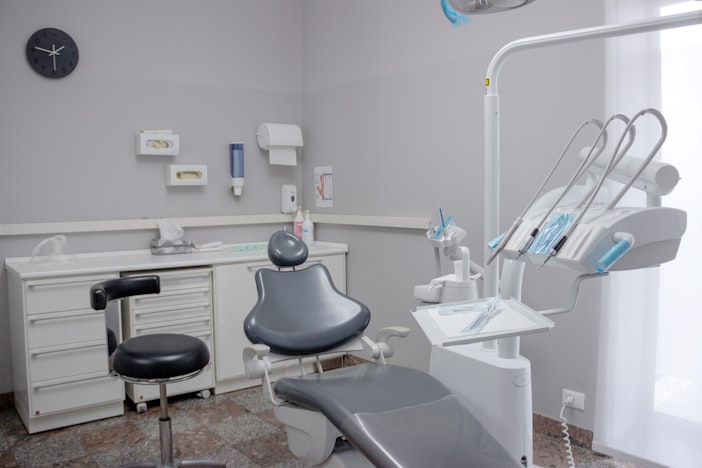
If you're reading this with a throbbing ache at the back of your mouth, we know exactly what you're experiencing, because we see it every week. Wisdom tooth pain has a particular quality to it: deeper than a regular toothache, more diffuse, harder to pinpoint, and with a cruel habit of getting dramatically worse the moment you lie down at night. It radiates into your ear, your temple, the hinge of your jaw. You keep pressing your cheek and it feels swollen from the inside, even though the mirror shows nothing much.
The good news, and this matters when you're in the middle of it: wisdom tooth pain always has an identifiable cause, and the path from "this is awful" to "this is over" is genuinely straightforward. Usually a £20 emergency appointment at UrgentCare Dental for the assessment and X-ray, antibiotics if there's infection, and either pain management while the tooth settles or extraction at £549 (or £695 with IV sedation) if the tooth needs to come out.
This post walks you through the different causes of wisdom tooth pain so you can work out roughly what's happening, what's genuinely worth trying at home while you wait for an appointment, and what the path to resolution actually looks like. If you just want the quick version of what to do right this minute, our guide to what to do in a dental emergency, and what it costs has a wisdom-tooth section with the calming steps and the honest prices alongside it.
The quick version: wisdom tooth pain nearly always comes from one of three things: the tooth erupting up through the gum, inflammation around a tooth that's only part of the way through (a common problem called pericoronitis), or a tooth that's impacted and quietly pushing against its neighbour. You can usually take the edge off at home with ibuprofen and warm salt water rinses, and the rule of thumb is to get seen the same day if the pain is climbing rather than easing, your face starts to swell, or you come down with a fever.
How long does it last? When it's simply the tooth erupting and there's room for it to come through, the ache arrives in waves over a few weeks, sometimes a couple of months, and fades once the tooth is fully out. The other causes, pericoronitis, decay, and an abscess, don't quietly resolve on their own, so pain that keeps returning or slowly builds over more than a few days is your cue that it needs an appointment rather than more waiting.
When it can't wait: most wisdom tooth pain is miserable but safe to hold for a day or two until you're seen. The signs that mean now rather than later are swelling spreading up towards your eye or down into your neck, a fever or feeling genuinely unwell, or finding it hard to swallow or open your mouth. Those tell you an infection is moving beyond the tooth, and that's the one version of this that needs same-day urgent care.
Working Out What's Causing It
Wisdom tooth pain isn't one thing. There are really five distinct causes, and most of the time you can narrow down which one you're dealing with based on how the pain feels and what else is going on. That doesn't replace getting seen, but it does help you understand what's happening and roughly what to expect.
The most common cause is just plain eruption, where the tooth is actively pushing through the gum and the tissue is stretching, tearing slightly, and inflaming in response. If that's what you've got, it feels like a deep, pressure-shaped ache that comes in waves, often with a few days of soreness followed by a quiet period followed by another flare as the tooth pushes further. Eruption pain is essentially the same thing as teething in babies, just happening twenty years later to an adult who didn't sign up for it. If the tooth has room to emerge fully, this kind of pain resolves on its own over weeks or months. Ibuprofen, salt water rinses, and patience are the whole treatment.
The second type, which we see a lot of in emergency appointments, is pericoronitis, and this is where things get more uncomfortable. It happens when the wisdom tooth partially erupts but doesn't make it all the way through, leaving a flap of gum tissue (called an operculum, one of those words you didn't know you'd ever need to know) draped over the still-hidden portion of the tooth. Food and bacteria get trapped under that flap, the area gets infected, and the pain turns from "deep pressure" into "sharp, localised throbbing, hard to open my mouth, foul taste in my mouth, definitely not okay." Pericoronitis is the classic wisdom tooth emergency, and it's usually what prompts people to finally make the appointment they've been putting off for years.
The third cause is straightforward decay. Wisdom teeth sit at the very back of the mouth where brushing is awkward and flossing is, honestly, almost impossible even for people who floss religiously. That makes them uniquely vulnerable to cavities, and those cavities can develop quite significantly before you notice because the tooth's location makes it hard to see. Decay pain in a wisdom tooth feels like decay pain anywhere: sensitivity to hot, cold, and sweet things at first, progressing to a constant ache as the cavity reaches deeper into the tooth. The difference with wisdom teeth is that because they're not really doing any useful chewing work, they're usually better extracted than filled when decay shows up.
The fourth is pressure from impaction. An impacted wisdom tooth is one that can't erupt properly because it's angled wrong or there isn't enough room in the jaw. It can sit there for years causing no problems, and then start pushing against the neighbouring molar with enough force to cause a deep, aching pressure that transmits through the whole dental arch. Patients with impaction pressure often say the pain feels like it's coming from multiple teeth at once, or they can't tell which specific tooth is the problem. It can also cause headaches, earache on the same side, and jaw joint discomfort, all from a single tooth at the back of the mouth that you might have forgotten about.
And the fifth is an abscess at the root of the tooth, which is the most severe. The pain is deep, throbbing, constant, and barely responds to over-the-counter painkillers. There's often facial swelling, the area feels hot to touch, and it's extremely tender. If that's what's happening, you need to get seen urgently, because abscesses can escalate if left untreated. The tooth is the source, which means the proper fix is extraction to remove the cause. Antibiotics come in alongside if the infection has spread beyond the tooth, but they don't fix an abscess on their own: the tooth has to come out to end it properly.
Why It's Always Worse at Night
If you've noticed your wisdom tooth pain gets dramatically worse once you lie down, you're not imagining it and you're not being dramatic. There's a real physiological reason for it, and it's worth knowing because it changes what you can do about it.
When you lie flat, blood flow to the head increases. The inflamed tissue around a wisdom tooth gets a bigger share of that blood supply, the swelling intensifies, and nerve endings that were already irritated now have more pressure on them. The pain that was sitting at a 4 during the day genuinely does become a 7 at 2am, because the physical conditions around the tooth have changed.
There's also the psychological angle, which is just as real. During the day, your brain is processing a hundred different inputs: work, conversations, screens, movement, other people. There's always something competing with the pain for your attention. At night, lying in the dark with nothing happening, your entire conscious awareness contracts to that one throbbing spot at the back of your jaw. It's just you and the tooth, and the tooth is winning.
The practical things that help: sleep propped up on two or three extra pillows, which reduces the blood pressure to your head and genuinely takes some of the edge off. Take 400mg of ibuprofen about an hour before bed so it's in your system and working by the time you're lying down. A cold compress (a bag of frozen peas wrapped in a thin towel so you don't freezer-burn your skin) held against the outside of your cheek for 20 minutes can numb the area enough to get you to sleep. And honestly, put on a boring podcast or audiobook at low volume. The distraction of a voice in the background gives your brain something else to latch onto, and wisdom tooth pain is a lot easier to doze through when you're not silently counting throbs.
What the Dentist Actually Does
When you come in for a wisdom tooth appointment, the assessment itself doesn't take long. The dentist will have a look at the area behind your last molar, checking for swelling, redness, any pus or foul smell, whether the tooth is partially erupted, and the general condition of the gum tissue. They'll gently explore around the tooth with a probe to check for pockets where food might be getting trapped and for any decay on the tooth itself. This whole visual examination takes a couple of minutes.
The X-ray is the part that really tells the story. It shows what's happening below the gum line: the angle the tooth is sitting at, how deeply it's buried, whether it's impacted and in what direction, whether there's any decay, whether there's infection brewing at the root tip, and crucially, how close the roots are sitting to the main nerve that runs through the lower jaw (the inferior alveolar nerve). That nerve proximity matters because it affects how the extraction is planned if one is needed.
Within about ten minutes of sitting down, the dentist will be able to tell you which of the five pain types you've got, what the treatment options are, and roughly what each of those options costs. That's the moment when wisdom tooth pain goes from feeling like a crisis to feeling like a problem with a plan. And for most people, that psychological shift is almost as valuable as the actual treatment.
What the Treatment Looks Like
The treatment obviously depends on what's causing the pain, but the patterns are fairly predictable.
If it's just eruption pain and the tooth has room to come through naturally, there's often no active treatment needed. The appointment confirms that's what's happening, rules out anything more serious, and reassures you that this will sort itself out over the coming weeks. Sometimes that reassurance alone makes the pain feel more manageable, because knowing it's a normal process rather than a looming disaster changes how you experience it. You leave with guidance on managing the symptoms at home, and the problem resolves on its own timetable.
If it's pericoronitis, the dentist will irrigate under the gum flap to flush out the trapped debris and talk through what happens next. For a localised episode with no spreading infection, irrigation and good oral hygiene may be enough to settle things down. Antibiotics (£9.90 per prescription in England, free in Scotland/Wales/Northern Ireland) come in if the infection has moved beyond the local area, or if you're feeling genuinely unwell with it. But pericoronitis has a frustrating habit of coming back, and if you've had two or three episodes, extraction is the sensible answer, because otherwise you're signing yourself up for this cycle indefinitely, and every course of antibiotics is kicking the can rather than solving anything.
If it's decay, the usual recommendation for a wisdom tooth with a cavity is extraction rather than filling. That sounds drastic until you remember that wisdom teeth aren't doing any important chewing work, the cavity is in an awkward location that's hard to restore well, and filling it just preserves a tooth that's likely to develop more cavities later. Pulling it solves the problem permanently.
For impaction pressure where the tooth is pushing against its neighbour, the assessment looks at whether there's actual damage happening to the neighbouring tooth or whether it's just intermittent pressure. If there's damage, extraction is clearly the right call. If not, monitoring with regular X-rays might be fine for a while.
And for an abscess, the proper answer is extraction to remove the source of the infection, and that can usually happen on the same day. Modern nerve-block technique gets the anaesthetic working even in inflamed tissue, so the old "wait a week on antibiotics" routine isn't the default it used to be. If the infection has already spread beyond the tooth (swelling creeping up toward your eye or down your neck, fever, feeling generally unwell), your dentist may start you on antibiotics first to stabilise things before the extraction, but that's a clinical judgment based on what they see, not a routine wait.
Wisdom tooth extraction at UrgentCare Dental is £549 per tooth. If you'd like IV sedation with it, which a lot of patients prefer because it makes the whole experience much easier, the combined package is £695. Across the UK generally, wisdom tooth removal runs £200-£600 per tooth privately, so our pricing sits in the middle of that range but with sedation available at a reasonable add-on rather than a premium option.
Managing the Pain While You Wait
If your appointment is tomorrow or later in the week, here's what genuinely helps.
Ibuprofen is the front-line option, because wisdom tooth pain is heavily driven by inflammation and ibuprofen treats both the pain signal and the inflammation that's causing it. 400mg every 6-8 hours is the standard adult dose. Take it with food if you can, because on an empty stomach it can cause irritation, but don't skip doses just because you haven't eaten: the consistent anti-inflammatory coverage is what keeps the pain manageable over days rather than hours.
Paracetamol can be taken alongside ibuprofen, because they work on completely different pain pathways. 1000mg every 4-6 hours. The trick that really works, and that most people don't know about, is to alternate them: ibuprofen at 12, paracetamol at 3, ibuprofen at 6, paracetamol at 9, and so on, so you're taking one or the other every 3 hours. That gives you continuous coverage through the day rather than peaks and troughs, and it's significantly more effective than either medication alone.
Clove oil (available in most chemists) provides genuine localised numbing when applied directly to the painful area with a cotton bud. The active ingredient is eugenol, which is a real analgesic used in dental products like temporary fillings. It tastes strongly of cloves (obviously) and the relief lasts maybe 20-30 minutes, but it's properly effective while it's working. Good for specific moments (eating, trying to fall asleep) when you need a bit of extra help.
Salt water rinses (a level teaspoon of salt dissolved in a mug of warm water, swished gently around the mouth for 30 seconds and then spat out) help reduce the bacterial load around the tooth and soothe inflamed gum tissue. For pericoronitis specifically, these are worth doing 3-4 times a day because keeping the area under the gum flap clean genuinely speeds recovery. Don't swallow it, obviously, the salt levels would make you feel rough.
A cold compress against the outer cheek, 20 minutes on and 20 minutes off, reduces swelling and numbs the area from outside. It's particularly helpful at night when the pain peaks, and a bag of frozen peas wrapped in a tea towel works perfectly well. You don't need a fancy gel pack.
Things to avoid: really hot food and drink (heat increases inflammation), chewy or crunchy food that forces the jaw to work hard around the sore area, and alcohol (it increases inflammation and interacts with some painkillers). Soft, cool foods like yoghurt, smoothies, soup, and scrambled eggs are your friends for the few days until the appointment.
These measures manage the symptoms. They don't fix the underlying problem, but they keep the pain bearable while you're waiting to see the dentist, and they give you enough control over the situation that you can sleep and function and not feel completely at the mercy of a tooth.
Common Questions About Wisdom Tooth Pain
How to help with wisdom tooth pain?
While you're waiting for your appointment, the two things that help most are ibuprofen and warm salt water. Ibuprofen (400mg every 6 to 8 hours, taken with food) works so well here because it calms the inflammation that's actually driving the pain, not just the pain signal itself. Warm salt water rinses, a teaspoon of salt in a mug of warm water swished gently and spat out three or four times a day, keep the area around the tooth clean, which matters a lot if a gum flap is trapping food. A cold compress on the cheek for 20 minutes at a time eases the swelling, and propping yourself up on a couple of extra pillows stops the throbbing peaking the moment you lie flat at night.
How long does wisdom tooth pain last?
If it's simply the tooth erupting and it has room to come through, the pain comes and goes in waves over a few weeks, occasionally a couple of months, and settles for good once the tooth is fully through. Pain from pericoronitis, decay, or an abscess is different: it won't clear up on its own and tends to keep flaring until the cause is treated. So a handy rule is that pain which keeps coming back, or steadily gets worse over more than a few days, is telling you it's time for an appointment rather than more patience.
What is the 3-3-3 rule for toothaches?
It's a memory trick people use for the painkiller side of a toothache while they wait to be seen: roughly 600mg of ibuprofen (three 200mg tablets) taken three times a day, for no more than three days. The thinking is that ibuprofen calms the inflammation around the tooth, and that three-day limit doubles as a gentle reminder that pain lasting that long really wants a dentist rather than another packet of tablets. Always take it with food and check it's suitable for you, and think of it as a bridge to your appointment rather than a cure. Plenty of people find that alternating ibuprofen with paracetamol, one or the other every three hours, gives them steadier relief through the day.
How do I know if wisdom tooth pain is serious?
Most wisdom tooth pain is uncomfortable rather than dangerous, and it's fine to wait a day or two for an appointment. What changes the picture is any sign that an infection is spreading: swelling creeping up toward your eye or down your neck, a fever, a bad taste from trapped pus, or struggling to swallow or open your mouth properly. If any of those are happening, please don't sleep on it; an emergency appointment that day gets the tooth assessed and X-rayed so the infection can be dealt with before it goes further. When in doubt, getting it looked at sooner is always the calmer choice.
The Decision You've Probably Been Putting Off
For a lot of people, wisdom tooth pain is the point at which they finally confront a decision they've been deferring for years.
The dentist mentioned your wisdom teeth at some point, probably more than once. They showed up on an X-ray as impacted or partially erupted, and the suggestion was made to think about having them removed. And you filed it under "maybe later" because they weren't actually causing problems and life was busy and there are infinitely more pleasant things to spend money and time on than getting teeth surgically removed.
Now it's not "maybe later." Now it's "this is happening." And the practical question isn't really "should I get this sorted?" any more. It's "should I get it sorted properly now, or should I deal with recurring flare-ups every few months for the foreseeable future?"
Recurring wisdom tooth pain, especially from pericoronitis, tends to follow a predictable cycle. Infection, antibiotics, relief, a quiet period, reinfection. Each cycle costs you an emergency appointment and a course of antibiotics and a week of feeling rubbish. Three cycles over a year, which is not unusual once pericoronitis starts, costs more in aggregate than a single extraction that ends the cycle permanently. And that's just the financial side. The less measurable cost is what it does to your life to have this thing flaring up unpredictably and ruining weeks at random intervals.
The extraction is the full stop. The pain stops. The infections stop. The 2am throbbing stops. And the recovery, while not a fun week, is genuinely just a week. Soft food, regular painkillers, rest, and then it's done. Permanently.
At UrgentCare Dental, the path from wisdom tooth pain to resolution starts with a £20 emergency appointment. The assessment, the X-ray, the diagnosis, the clear plan. And whatever version of you is lying in the dark at 2am wondering whether this is ever going to end, that version gets to finally rest.
Toothache that won't quit? Seen today.
£20 books an emergency appointment, today. Your dentist gets to the root of it and treats it where clinically possible in the same chair. That is when the pain stops.
Or see every emergency treatment, with prices →